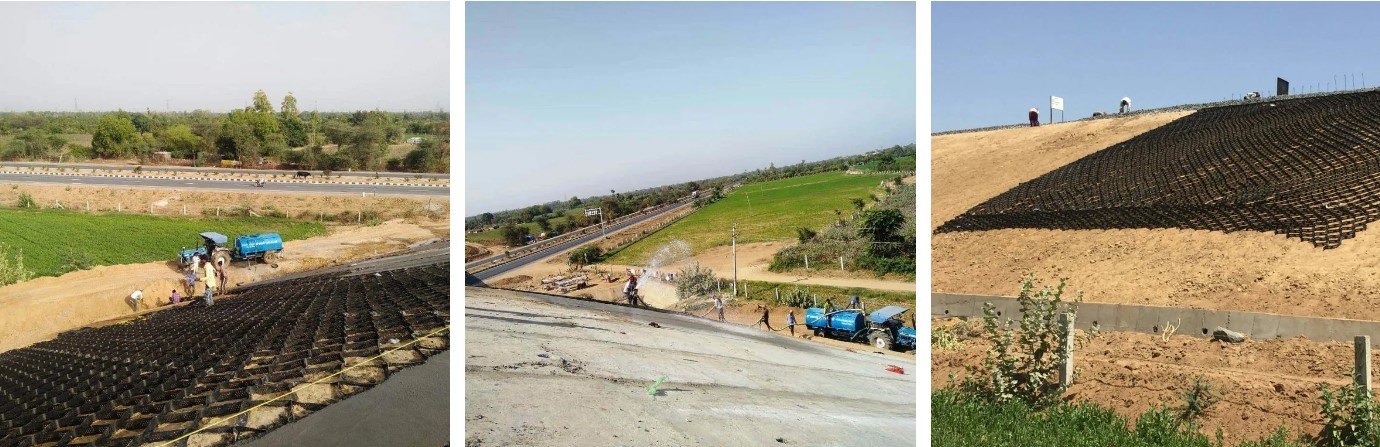
What is aperture stability modulus? The Aperture Stability Modulus (ASM) is also called In-plane torsional rigidity. It can be defined as a critical parameter that evaluates the effectiveness of geogrids. These are usually made of polymer materials such as polyester, polyethene, polyvinyl alcohol, or polypropylene. It has big holes or openings that strengthen the layers… Continue reading Aperture stability modulus
What is the aperture size of geosynthetic materials? Geosynthetic materials have an important coefficient to perform the function of geotechnical project applications, such as reinforcement of the soil, filtration, and drainage. The value of this parameter can be measured depending on the specific type and application; it reflects the size or spacing of reinforcement elements… Continue reading Aperture size
Definition, factors affecting it, and its importance in geotechnical studies What is the angle of repose? The angle of repose is the angle at which the material stops sliding and begins to rest in a state of equilibrium. The slope that sand takes naturally when poured on a flat surface is the angle of repose.… Continue reading Angle of repose
Anchorage system in civil engineering Anchorage systems connect structures firmly to the ground. They safely transfer tensile loads into soil or rock and keep reinforcements, facings, or structural parts stable when under tension. From retaining walls and embankments to tunnels, landfill cappings, and erosion control systems, the reliability of the anchorage has an important role… Continue reading Anchorage system
What is the definition of allowable axle load? Every aspect is crucial, from understanding soil behaviour to constructing a structure. On-time transportation of construction materials is essential for a smooth construction process. However, efficient transportation requires good transport infrastructure, which includes well-constructed roads. Heavy vehicles have a massive impact on roads. This is where allowable… Continue reading Allowable axle load
What are aggregates? Aggregates are granular materials such as sand, gravel, crushed stone, crushed hydraulic cement concrete, or air-cooled iron blast-furnace slag. These materials are combined with hydraulic cement to produce concrete or mortar. Aggregates are classified into two groups based on size: coarse aggregates (material retained on the 4.75-mm (No. 4) sieve) and fine aggregates… Continue reading Aggregates
Access roads What are access roads? Access roads are essential for transportation and infrastructure development. They serve specific functions, providing connectivity to areas like construction sites, forests, state institutions, and sources of raw materials. Although simpler than regular roads, access roads provide numerous benefits, particularly in specialized operations like timber harvesting and site development. … Continue reading Access roads