logo
project-banner

Overview

How to Improve Embankment Stability on Weak and Soft Soils?

Infrastructure built on weak or compressible soils faces predictable challenges:

• Low bearing capacity

• Excessive and differential settlement

• Instability during construction

• High material consumption and extended timelines

Conventional solutions such as deep excavation or full soil replacement demand large volumes of material, extended working windows, and high cost. In soft ground, they are difficult to execute and often impractical.

In most soft soil conditions, embankments deform progressively before failure, but rapid undrained loading or hydraulic instability can result in sudden failure. As settlement develops, one section moves more than the next. At bridge approaches, this becomes a bump. Along rail corridors, it becomes a geometry correction issue. In industrial yards, rutting returns because the foundation continues to yield under repeated loading.

Adding more fill does not correct this. Increasing height increases vertical stress. It accelerates consolidation and can reduce the factor of safety in weak soils.

Embankment performance depends on how the load is transferred through the structure and into the subgrade.

Strata Geosystems addresses this by modifying the load path. StrataGrid™,StrataWeb®, and SGB Grid work together to create a reinforced composite mass that controls deformation, redistributes stress, and improves structural stiffness without altering the intrinsic soil properties. Reinforcement does not change the soil. It changes how forces move through the system.
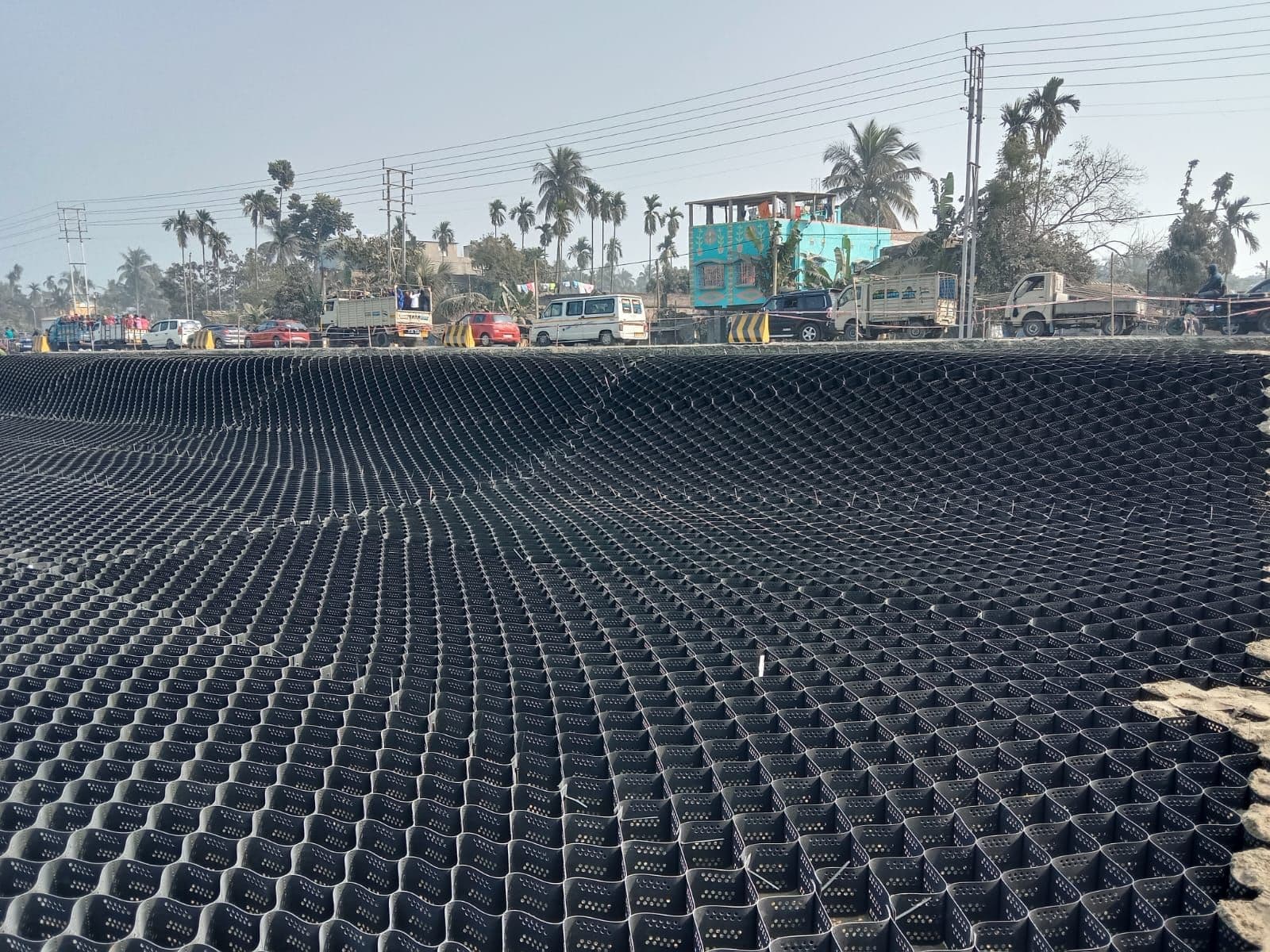
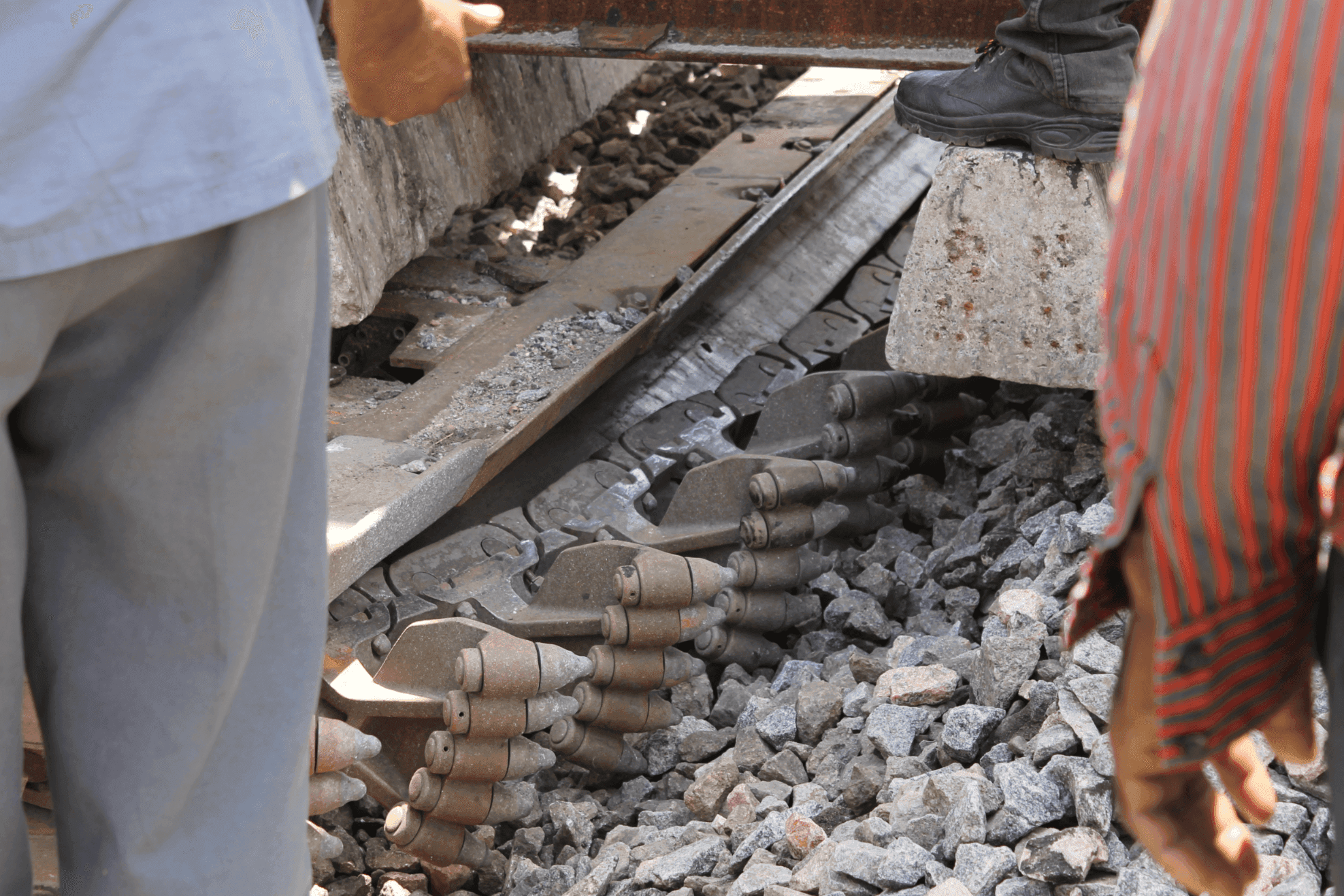
StrataGrid Uniaxial Geogrid installation

Key advantages of embankment & round improvement solutions

Improves the apparent bearing capacity of weak subgrades

Modifies failure mechanisms to increase the load-carrying performance of the reinforced system.

Reduces differential settlement and surface distortion

Enhances stiffness continuity and moderates deformation gradients

Enhances short-term and long-term embankment stability

Controls lateral spreading during construction and under service loading.

Optimizes use of fill material

Improves the structural efficiency of selected aggregates through confinement.

Reduces unnecessary excavation and replacement

Minimizes over-design by improving the performance of in-situ soils.

Enables faster construction in soft ground

Provides immediate working platforms for staged embankment construction.

Minimizes long-term maintenance requirements

Controls strain accumulation and preserves surface geometry.

Provides a structurally efficient and sustainable solution

Reduces material consumption while maintaining performance requirements

Applications of embankment & ground improvement

Confinement within the granular base
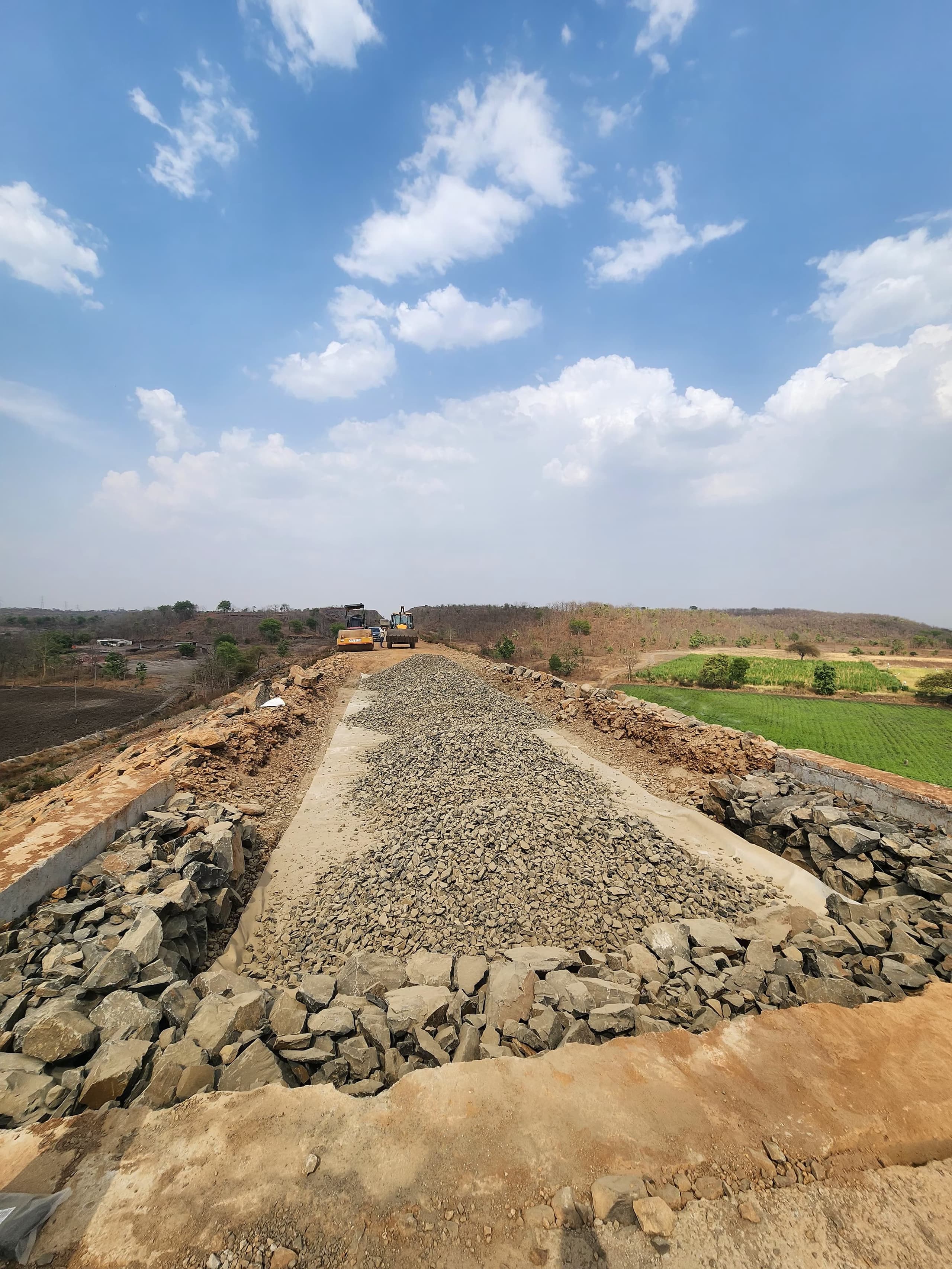
Confinement within the granular base

Under traffic loading, granular layers spread laterally. As particles move outward, confinement decreases. Shear strain increases. Stiffness drops.
StrataGrid and SGB Grid are biaxial geogrids engineered to interlock with aggregate. Their apertures engage aggregate particles and restrain lateral movement. This increases confinement and raises the apparent composite resilient modulus of the reinforced layer.
Mechanistic–empirical pavement design incorporates it through modulus improvement factors derived from system testing.
Improvement depends on subgrade stiffness, aggregate quality, and reinforcement stiffness.
Reinforcement does not compensate for poor material selection. It ensures the selected material performs to its structural potential.
Three-dimensional confinement in very weak soils
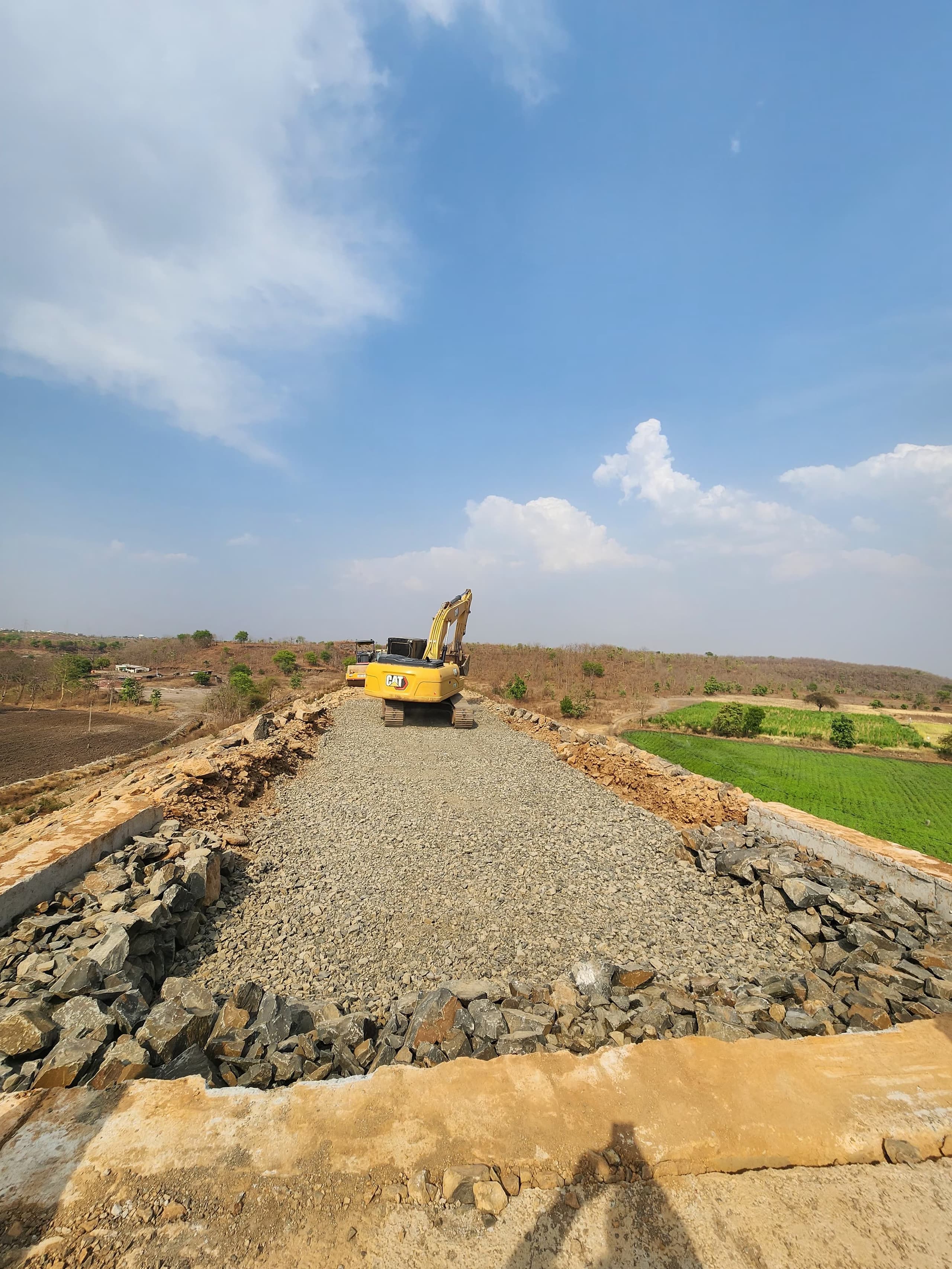
Three-dimensional confinement in very weak soils

When subgrade CBR falls below 3%, deformation governs design.
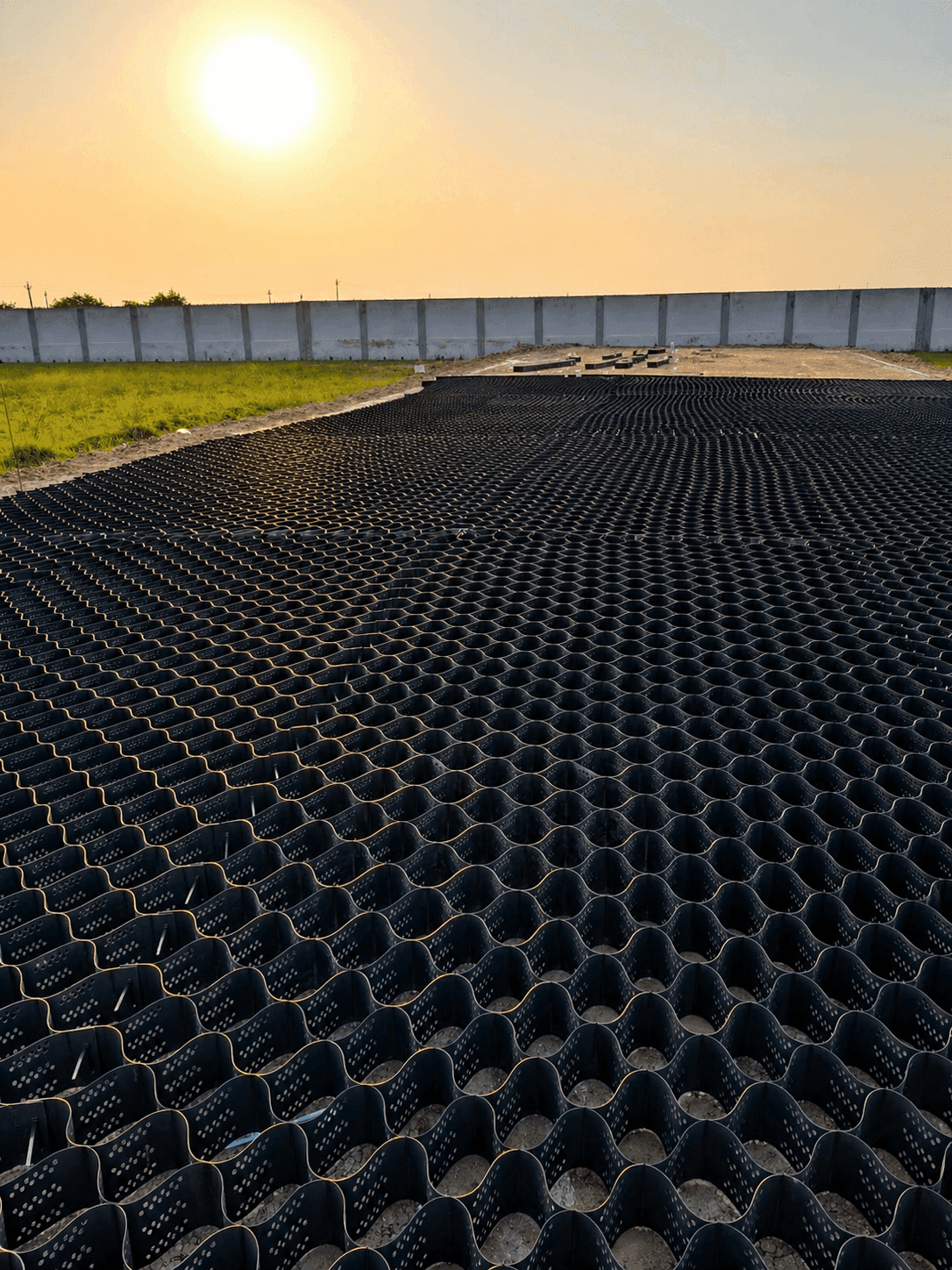
In these conditions, StrataWeb provides full-depth lateral confinement within the infill. The confined layer distributes load more uniformly and reduces punching into the subgrade during construction.
Where rut depths become significant, tensile membrane action contributes additional resistance. This mechanism develops only under larger deformations. The primary benefit remains confinement and improved shear resistance.
The result is a stable working platform that supports equipment and controls early-stage rutting.
Stress distribution at the subgrade interface
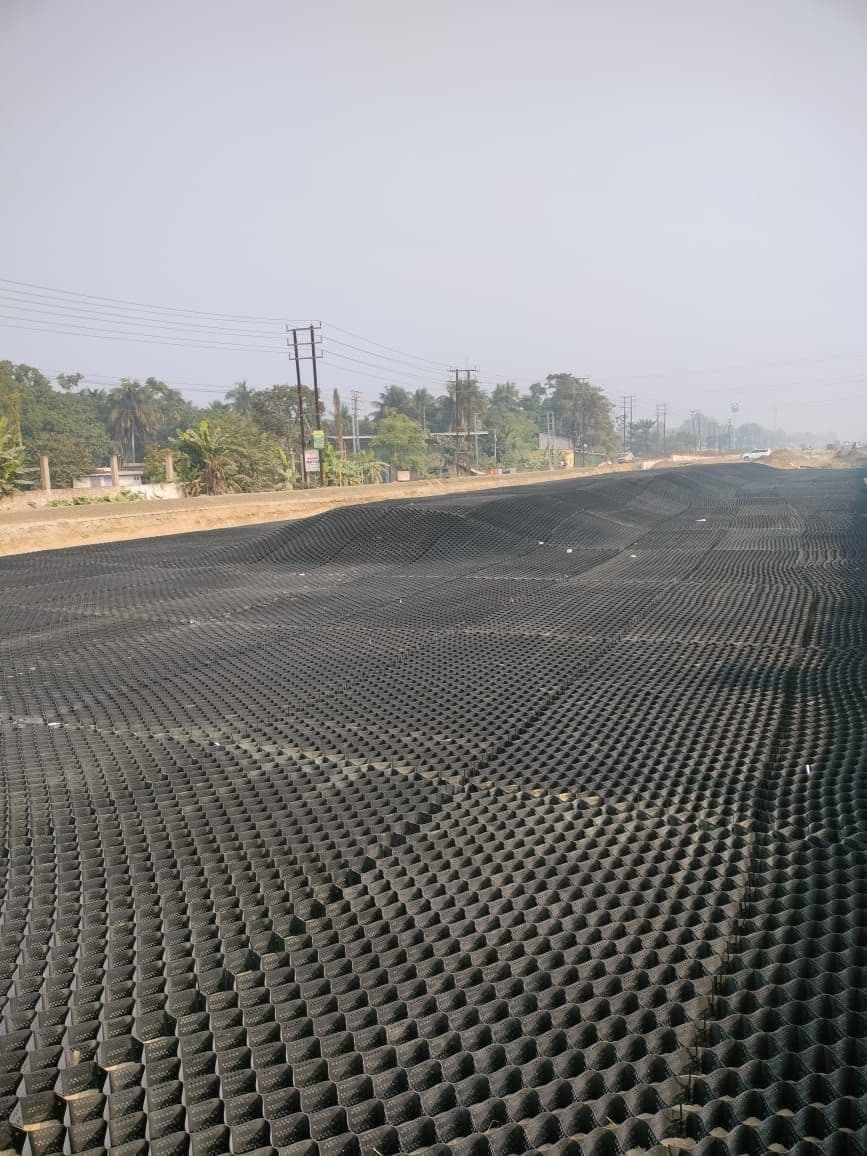
Stress distribution at the subgrade interface

Unreinforced granular layers may transmit load in relatively concentrated stress bulbs, particularly over compressible subgrades. This leads to localized strain and differential settlement.
A reinforced basal layer redistributes stresses more uniformly, reducing peak stress concentrations at weak zones. The total vertical load does not reduce. Instead, stress spreads laterally before reaching the weakest regions, lowering localized shear strain.
As deformation mobilizes interaction with the aggregate, tensile forces develop within the reinforcement.
The apparent bearing capacity of the reinforced system increases because the failure mechanism is modified.
Controlling differential movement

Controlling differential movement

Total settlement in compressible soils is governed by consolidation theory. Differential settlement governs performance.
Reinforcement improves stiffness continuity across the embankment surface. It reduces shear strain concentration within structural layers and moderates deformation gradients.
This is critical at the bridge approaches
• Culvert crossings
• Utility trenches
• Interfaces between new and existing embankments
Stiffness continuity reduces long-term maintenance demand.
Soft ground presents two distinct challenges:
  1. Construction-stage stability
  1. Long-term consolidation
Basal reinforcement using StrataGrid™or SGB Grid restrains lateral spreading at the fill–subgrade interface. This increases short-term undrained stability during staged construction.
Equipment operates on a reinforced platform. Shear deformation remains controlled during fill placement.
Where CBR falls below 3%, StrataWeb®confinement forms a stable working platform. The confined infill limits subgrade intrusion and reduces construction-stage rut depth.
This approach reduces excavation depth and minimizes replacement volumes while maintaining stability.
Slope stability within constrained footprints
Slope stability within constrained footprints

Where right-of-way limits embankment widening, internal reinforcement provides structural resistance without increasing the footprint.
Layered StrataGrid® reinforcement intersects potential failure surfaces. As shear stresses mobilize, tensile forces develop within the reinforcement layers. The resisting moment increases.
The factor of safety improves without flattening the slope. Stability is achieved through tensile resistance within the reinforced soil mass
Reinforcement and stabilization - distinct functions

Reinforcement and stabilization - distinct functions

Structural layers respond with greater stiffness as tensile elements alter internal stress distribution
Stabilization controls large deformation and enables construction over weak soils.
Confusing the two leads to improper design assumptions. Reinforcement improves performance under service loads. Stabilization ensures constructability where bearing capacity is limited.
Strata Geosystems evaluates:
• Undrained shear strength
CBR
• Groundwater conditions
• Loading intensity
• Deformation criteria
Design decisions are based on soil behavior, not assumptions.

More success stories

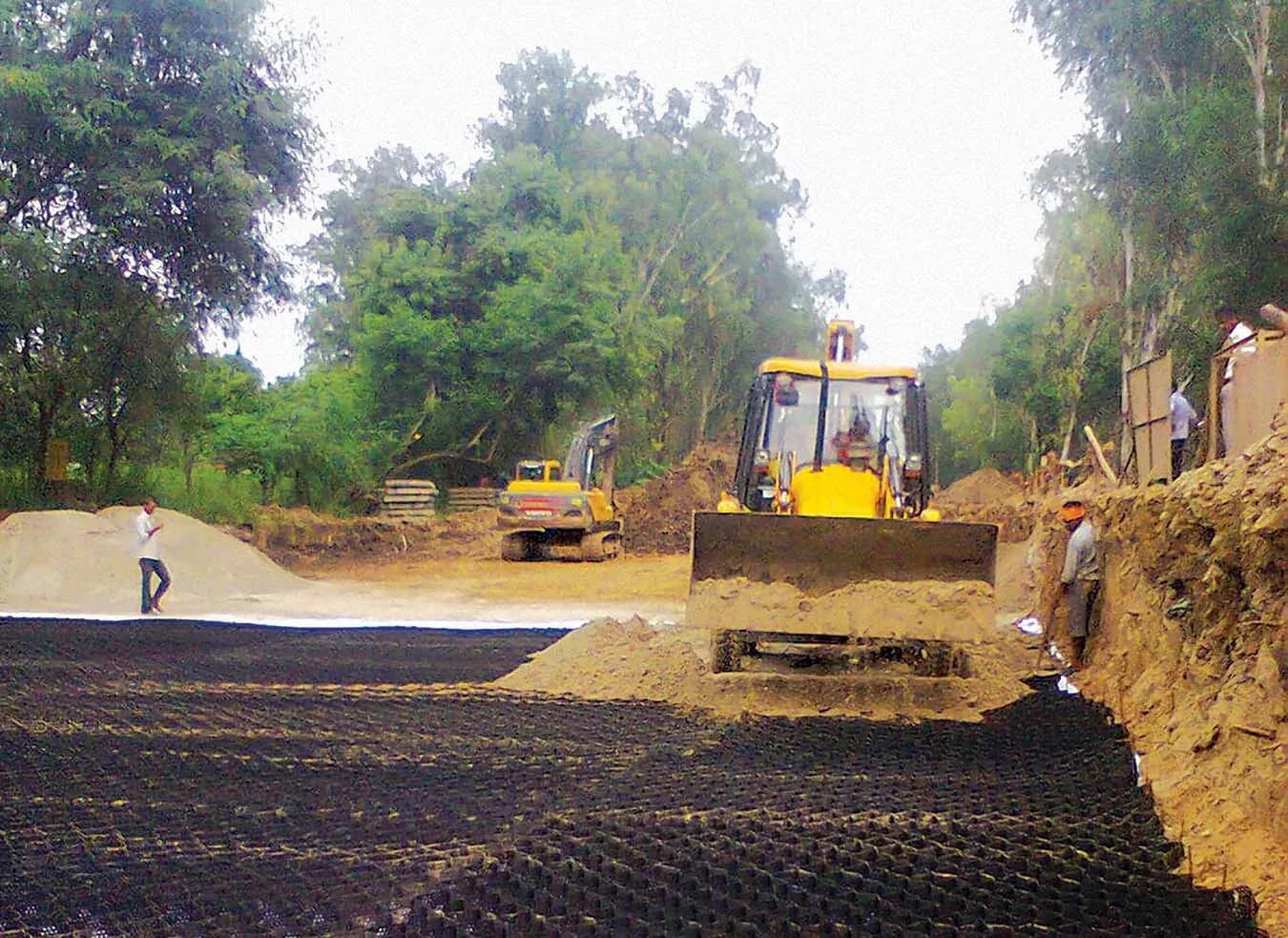
Pavement subgrade stabilisation by StrataWeb® geocells at Amaravati

Pavement subgrade stabilisation by StrataWeb® geocells at Amaravati

The client had built a new manufacturing facility and was looking to strengthen the internal roads for the yarn mill at Amravati, Maharashtra.

Read more
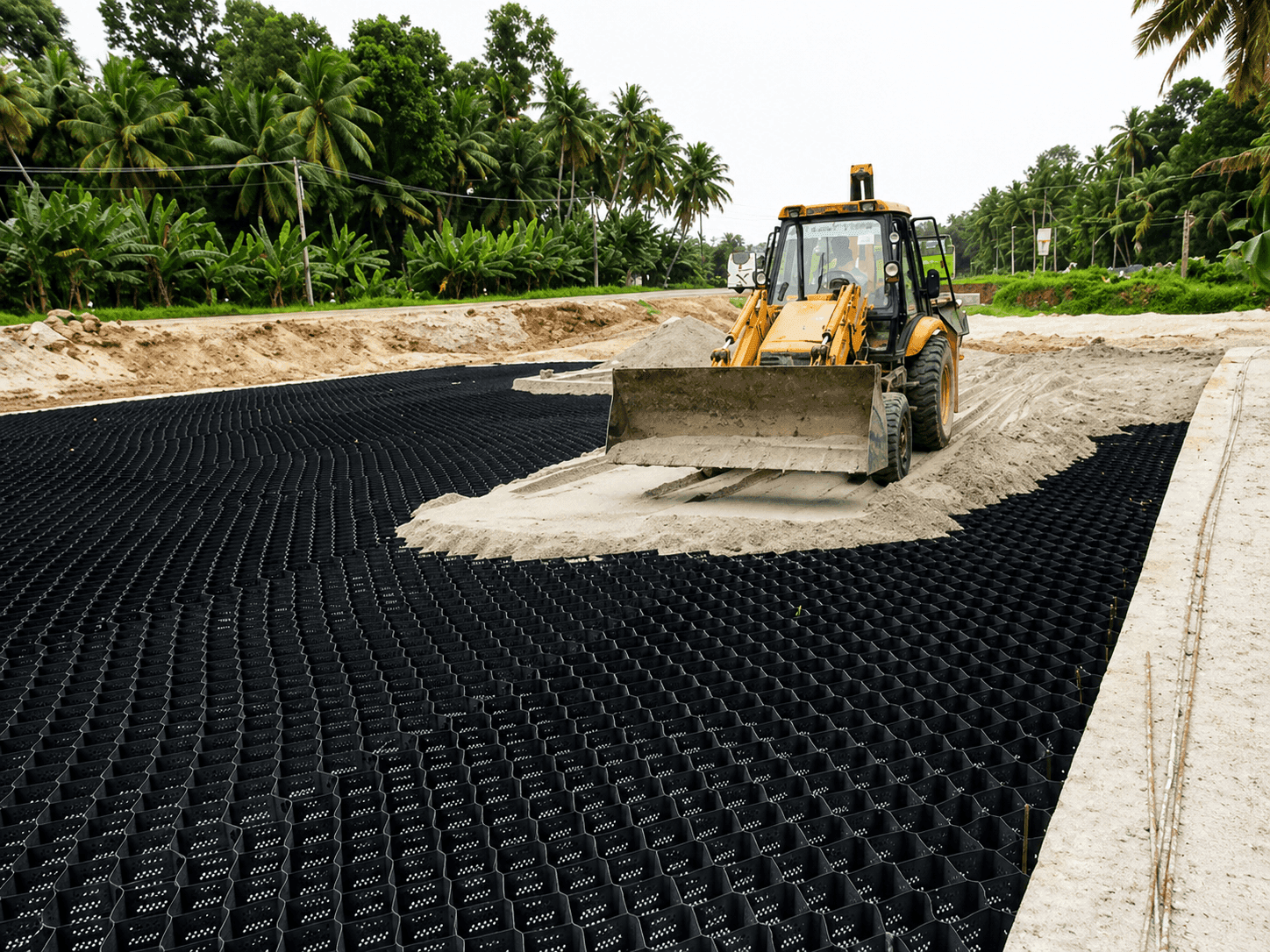
Reconstruction of Major District Road in Nashik using StrataWeb® geocells

Reconstruction of Major District Road in Nashik using StrataWeb® geocells

The Major District Road, MDR 31, passes through Shaha and Kolpewadi villages in Sinnar Taluka, District Nashik.

Read more
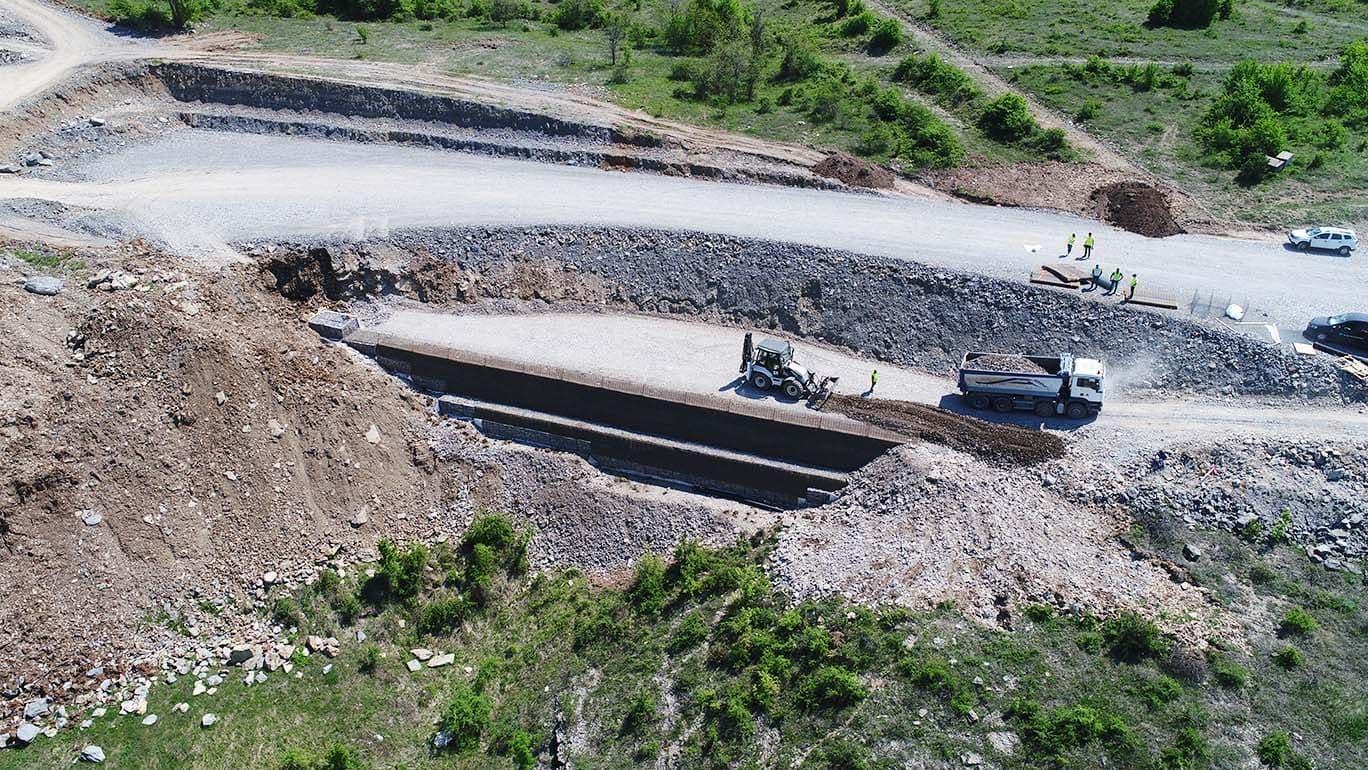
Embankment construction using StrataGrid® geogrids in Bulgaria

Embankment construction using StrataGrid® geogrids in Bulgaria

The Highway client stipulated that they required a ‘fast track’ geotechnical solution to help construct an embankment for a new highway between the Hemus University to the town of Hemus, Jablanica. The main challenges of this project were to finish it within a rapid deadline and ensure limited environmental impact due to the construction.
Read more

Looking for a little more than light reading?

StrataWeb® brochure

StrataGrid™ Brochure

CONSULTATION

From know-how to manufacture, installation and support.

Strata not only provides geotechnical products, but our team of 200+ engineers can help you with your turnkey project by supplying you with technical knowhow and support as to how our products can help you finish your projects in time while keeping costs down.

Send us your queries and we will get back to you with our expertise.