
Biaxial geogrid: definition, application, and benefits of using biaxial geogrids
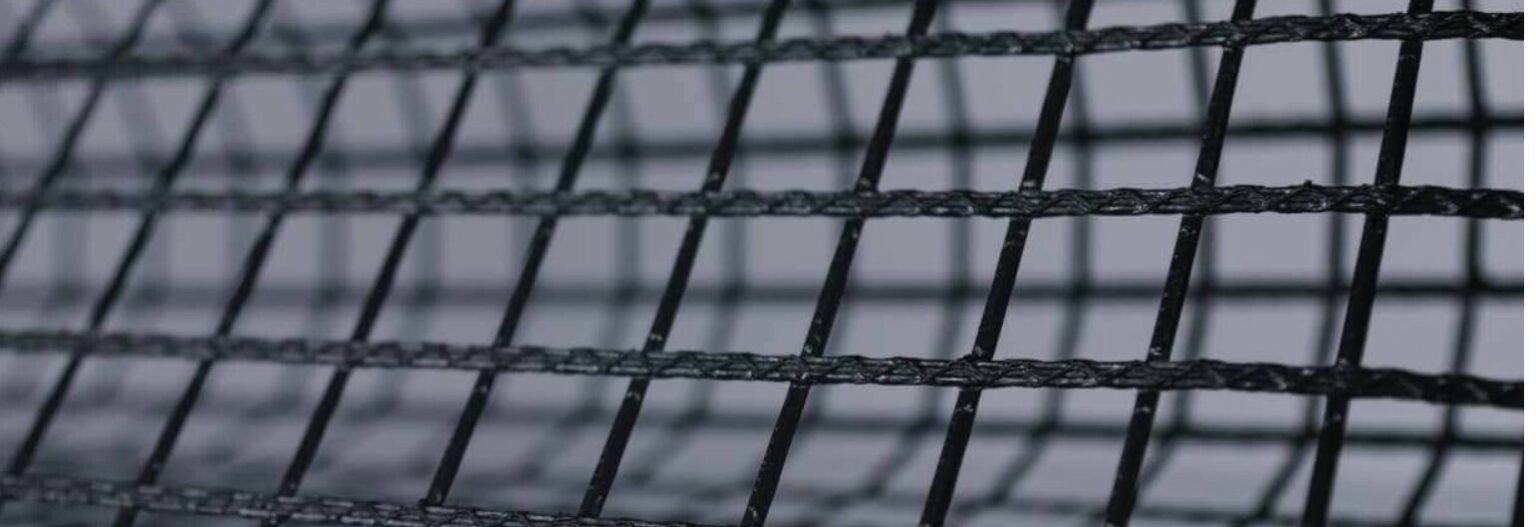
A biaxial geogrid is a geosynthetic material designed with soil reinforcement in two orthogonal directions: longitudinal and transverse. This has a high tensile strength in both axes, and its versatility is therefore suitable for many applications in civil engineering. Such geogrids are manufactured using materials such as polypropylene, polyester, or HDPE, thus providing durability and performance for any project requirements.
High-molecular-weight polyester (PET) yarns biaxial geogrids are produced at Strata Geosystems, which are knitted with care and coated with a proprietary formulation. This method offers strong tensile strength, reliable performance under environmental stress, and improved load distribution across the structure. By increasing the stiffness of the base layers, biaxial geogrids reduce the need for extra fill, lowering costs and making construction more efficient.
What are biaxial geogrids used for?
Biaxial geogrids are widely used on challenging construction sites to reinforce and stabilise the soil. They’re especially effective in situations where support is needed in both directions to improve load distribution and increase tensile strength. The applications include:
- Soft soil embankments: Soft, compressible soils are strengthened as they settle and deform.
- Basal reinforcement: Support provision under embankments and foundations, especially for bridges and buildings.
- Flexible pavement or asphalt reinforcement: The improvement of structural road capacity looks for resistance against rutting and cracking.
- Load transfer platforms: Load distribution in structures like bridge abutments.
- Void spanning solutions: Stabilize potential areas of voids, for example, landfill caps or leachate collection ponds.
Biaxial geogrids are developed to address key challenges in soil mechanics, offering lasting stability and reliable performance in demanding applications.
When is a biaxial geogrid preferred?
Biaxial geogrids are preferred in applications where soil reinforcement is required in both the longitudinal and transverse directions. Their structure allows loads to be distributed evenly across the surface, improving stability and reducing deformation in granular and cohesive soils. In particular, they’re well adapted to the following applications:
1. Slope reinforcement and retaining walls
Biaxial geogrids help distribute stresses uniformly within the soil mass, reducing localized shear failure and improving overall slope stability. By interlocking with the backfill material, they enhance internal friction and reinforce the soil structure. This makes them suitable for low to moderate height retaining walls and reinforced slopes where loads act in multiple directions.
2. Haul road stabilization
In mining and construction haul roads, biaxial geogrids are used to improve load distribution and minimize rutting caused by heavy, repeated vehicle movement. They confine aggregate layers, reduce lateral spreading, and improve bearing capacity of weak subgrades. This results in longer service life and reduced maintenance requirements.
3. Landfills and leachate collection ponds
Biaxial geogrids are used to maintain structural integrity of landfill caps and basal liners by controlling differential settlement. They provide reinforcement to soil layers while allowing efficient load transfer, which helps prevent cracking or deformation. In leachate collection systems, they support drainage layers while maintaining stability under long-term loading.
4. Problematic soil types:
- Cohesive soils: Soils with low tensile strength tend to expand and crack easily. Biaxial geogrids help minimise differential settlement and offer more consistent, stable support across the surface.
- Granular soils: Granular soils are well-drained, but prone to shear failure. Biaxial geogrids enable interlocking of particles in soil; they distribute load substantially without allowing rutting.
How are biaxial geogrids manufactured?
The process of manufacturing biaxial geogrids is demanding and requires precise engineering as diverse terrains, soil types, and environmental conditions impose stringent demands.
- Material selection: High-tenacity polyester yarn is used as the basis in biaxial geogrids, making this product durable, have good tensile strength and even resist environmental factors.
- Knitting process: A given amount of polyester yarns is removed from a creel and then wound on to a cylindrical beam. These yarns are then knitted into a dimensionally stable grid structure, thus forming the backbone of the geogrid.
- Coating process: The knitted grid is coated with a proprietary styrene-butadiene rubber (SBR) compound that boosts its resistance to abrasion. It also provides reliable protection against chemical exposure, mechanical wear, and environmental factors.
- Customizable specifications: Biaxial geogrids are available in different strength grades and aperture sizes, giving engineers the flexibility to choose what best suits the ground conditions. The right choice improves soil stability and helps distribute loads more efficiently.
Benefits of using biaxial geogrids:
Biaxial geogrids offer many advantages that make them very important in civil engineering:
- Improved soil stability: Biaxial geogrids work by reinforcing the soil in two directions. This helps firm up the base layers, giving structures a more solid and reliable foundation to stand on.
- Reduced construction costs: Utilizing biaxial geogrids eliminates the need for extra fill material, which significantly lowers costs. Moreover, their exceptional performance minimizes maintenance expenses over a longer period.
- Faster construction processes: With improved load distribution and reduced pavement crust thickness, biaxial geogrids streamline construction timelines.
- Enhanced load-bearing capacity: Biaxial geogrids avoid rutting and settlement even under heavy or recurrent traffic by distributing loads equally across the subgrade.
- Resistance to environmental factors: The robust construction protects against temperature changes, pH variation, and shifts in soil moisture, making it a reliable choice across diverse ground conditions.
Frequently asked questions about biaxial geogrids
1. What is the difference between uniaxial and biaxial geogrids?
Uniaxial geogrids offer reinforcement in a singular direction, typically longitudinal, whereas biaxial geogrids provide reinforcement in both longitudinal and transverse directions. This characteristic renders biaxial geogrids more adaptable for applications that necessitate multi-directional support.
2. How do biaxial geogrids improve pavement performance?
Biaxial geogrids improve load distribution across pavement layers by reinforcing the base. This limits settlement and rutting, resulting in a more durable and reliable surface over time.
3. Are biaxial geogrids environmentally friendly?
Indeed, biaxial geogrids are inert and do not have environmental sensitivity. It has an extended service life with the possibility of minimization of the use of fill materials that significantly supports sustainable construction methods.
4. Can biaxial geogrids be used in waterlogged areas?
Thanks to the water-resistant features of the biaxial geogrid, saturated sites function efficiently, delivering adequate reinforcement for any weaker saturated soils.
5. What are the typical sizes of biaxial geogrids?
Biaxial geogrids come in various aperture sizes and roll dimensions. The selection depends on the project’s soil type and load requirements.
In conclusion, biaxial geogrids form one of the most essential parts in modern civil engineering work that offers excellent two-dimensional reinforcement and stability to the soil. Their versatility, low cost, and resistance to environmental factors make them one of the preferred options for applications involving slope stabilization as well as landfill stabilization. High-performance biaxial geogrids at Strata Geosystems are designed to meet the stringent requirements of any construction project across the globe. Our biaxial geogrids ensure long-term durability and operational efficiency with customizable specifications and cutting-edge manufacturing techniques. Whether it is dealing with soft soils, granular materials, or difficult terrains, biaxial geogrids are the success formula.