
Soft clay and silty soils can retain excess pore water when subjected to new loads. As this water dissipates slowly, the soil consolidates over time, potentially causing settlement that affects construction schedules and the performance of structures built above it.
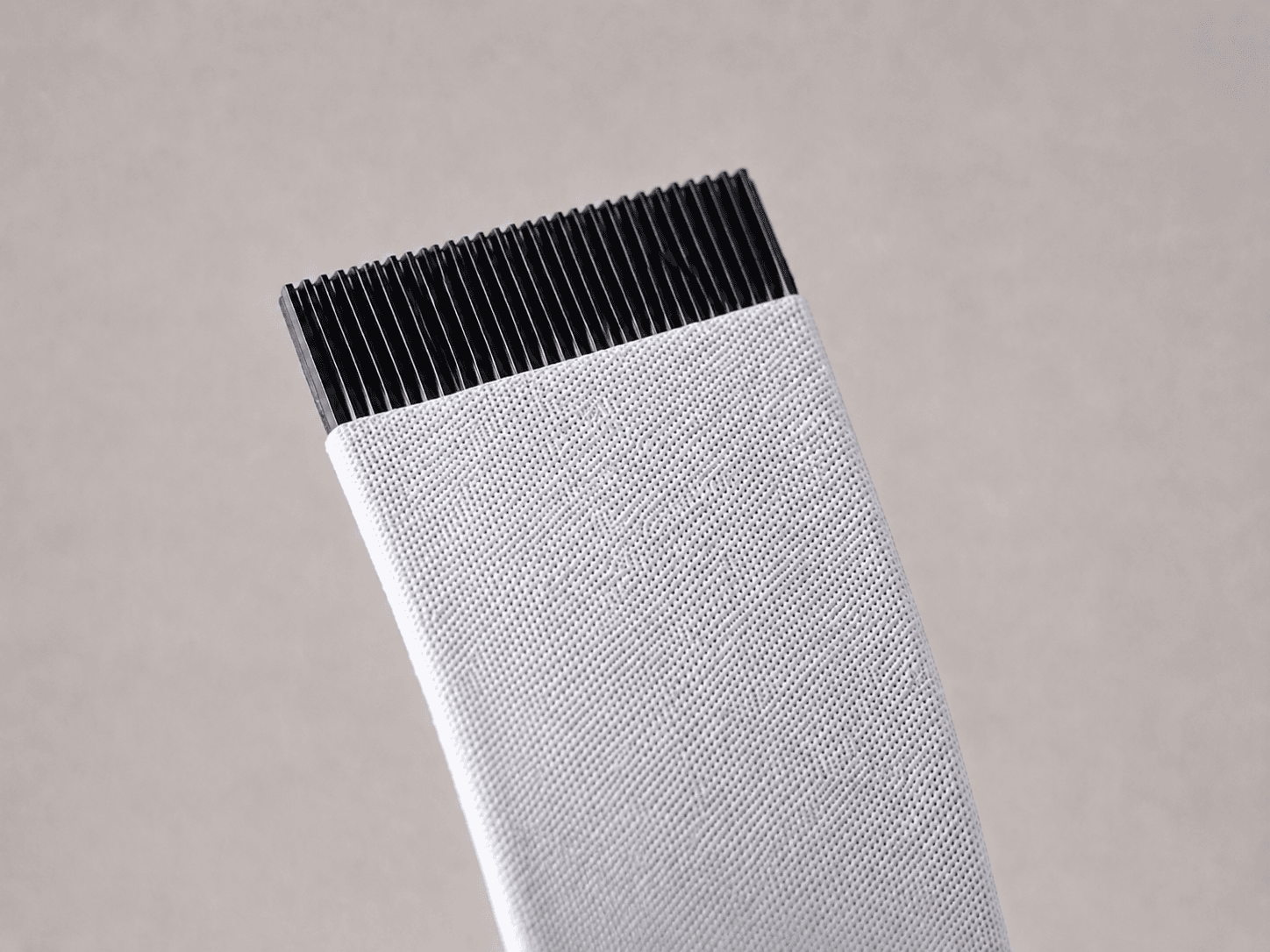
StrataDrain™ Prefabricated Vertical Drains (PVDs) accelerate this process by providing shorter drainage paths through the soil. Each drain consists of a drainage core enclosed in a geotextile filter jacket. The jacket allows water from the surrounding soil to enter while restricting soil particles from entering the drain. The water then flows vertically through channels in the core to a drainage outlet, typically at the ground surface.
When used with preloading or surcharge systems, StrataDrain™ PVDs help primary consolidation progress faster, allowing a greater proportion of the expected settlement to occur before construction begins. Their effectiveness depends on factors such as soil properties, drain spacing, installation depth, loading conditions and drainage capacity. They are commonly used in ground improvement for roads, railways, industrial facilities and other infrastructure projects.
StrataDrain™ PVD combines a drainage core with a geotextile filter jacket. Both components contribute to the drain’s performance during installation and throughout the consolidation period.
What makes our StrataDrain™ PVD unique?
Product Design & Performance
The drainage core provides a continuous path for collected water to flow vertically through the drain. The geotextile filter jacket allows water to enter the drain while helping limit the movement of soil particles into the core.
Material Specifications
StrataDrain™ PVD uses polypropylene (PP) as its base material. Polypropylene offers good chemical resistance, low density, and resistance to biological degradation in typical soil environments.
Filtration & Permeability
Filter properties and drainage capacity are important to maintaining water flow and reducing the risk of soil intrusion or clogging.
Installation Performance
Core strength and flexibility help the drain withstand handling and installation stresses. Performance under folding, deformation or kinking should be assessed against the product’s tested specifications.
Project-Specific Selection
Filter properties, drain dimensions and performance requirements should be matched to the ground conditions and the project’s design criteria.

Roads and Highways
Railways
Airports
Industrial Developments
Ports and Land Reclamation
Faster Soil Consolidation with StrataDrain™ PVD
Soft clay and silty soils can retain excess pore water when subjected to new loads. As this water dissipates slowly, the soil consolidates over time, potentially causing settlement that affects construction schedules and the performance of structures built above it.
StrataDrain™ Prefabricated Vertical Drains (PVDs) accelerate this process by providing shorter drainage paths through the soil. Each drain consists of a drainage core enclosed in a geotextile filter jacket. The jacket allows water from the surrounding soil to enter while restricting soil particles from entering the drain. The water then flows vertically through channels in the core to a drainage outlet, typically at the ground surface.
When used with preloading or surcharge systems, StrataDrain™ PVDs help primary consolidation progress faster, allowing a greater proportion of the expected settlement to occur before construction begins. Their effectiveness depends on factors such as soil properties, drain spacing, installation depth, loading conditions and drainage capacity. They are commonly used in ground improvement for roads, railways, industrial facilities and other infrastructure projects.
Shorter drainage paths
When a load is applied to saturated, compressible soil, excess pore water pressure develops. Without additional drainage paths, the water may take a considerable time to escape through the soil.
StrataDrain™ PVDs shorten this path. Water flows horizontally from the surrounding soil through the geotextile filter into the drain core, then travels vertically along the core towards the drainage outlet. When used with an appropriate preload or surcharge, this helps consolidation finish sooner, before the permanent structure is constructed.
PVD vs conventional consolidation
Surcharge preloading involves placing temporary soil fills over soft clay to simulate future structural loads. On its own, natural consolidation can take over 20 years, depending on soil permeability, clay layer thickness and drainage conditions.
StrataDrain™ PVD with surcharge preloading speeds this up by providing shorter radial drainage paths, allowing excess pore water to escape faster. This can reduce consolidation time from years to months, depending on soil conditions, drain spacing and the required degree of consolidation. The actual time reduction can be established through project-specific analysis.
Drain spacing and consolidation time
Closer spacing reduces the distance water must travel through the soil to reach a drain, so excess pore water pressure dissipates sooner and consolidation is completed more quickly. Wider spacing increases the drainage distance and the time required to achieve the target level of consolidation.
The appropriate spacing depends on soil conditions, PVD properties, the target degree of consolidation and the time available. Spacing and installation depth should be selected based on the soil profile, compressibility, permeability, loading conditions, project schedule and required degree of consolidation. Proper design helps balance the required ground improvement period with installation quantities and overall project requirements.
The role of filtration in PVD performance
The filter jacket must allow water to enter the drain while limiting the migration of surrounding soil particles. Its properties need to be suitable for the soil in which the PVD will be installed.
Filter selection typically considers soil grading, permeability, apparent opening size and the potential for clogging. These factors should be evaluated alongside the core’s drainage capacity to help maintain performance under the anticipated site conditions and loading.
Where can our StrataDrain™ PVD be used?
StrataDrain™ PVD is used in ground improvement projects where soft, saturated and compressible soils need to consolidate sooner, before construction begins.
The suitability of PVD treatment depends on the ground investigation, soil conditions, design loads and settlement criteria established for each project.
How is StrataDrain™ PVD installed?
StrataDrain™ PVDs are typically installed using a mandrel mounted on a suitable installation rig.
Step 1: Mandrel and anchor setup
The drain is threaded through the mandrel and connected to an anchor or anchoring plate at its lower end.
Step 2: Mandrel insertion
The mandrel is driven into the soil to the specified installation depth.
Step 3: Mandrel withdrawal
Once the target depth is reached, the mandrel is withdrawn while the anchor holds the drain in place. The installed drain remains in the ground, providing a vertical drainage path for excess pore water during consolidation.
Installation equipment
PVD installation is commonly carried out using purpose-built hydraulic rigs equipped with a mandrel. The equipment and mandrel arrangement are selected according to the required installation depth, site access, ground conditions and project scale. The installation method and equipment should be selected to suit the project-specific design and site conditions.
Installation quality and records
Installation depth, drain spacing, positioning and continuity should follow the approved ground improvement design. Careful installation helps limit damage to the drain and supports the intended drainage performance.
During installation, the rig should maintain the specified drain position and depth while minimising disturbance to the surrounding soil. Installation records can be used to document drain locations, depths and any site conditions that may affect the ground improvement programme.
Success Stories
Infrastructure demands solutions that perform under pressure. See how our certified systems and expertise have delivered long- term stability in projects across the globe.
How is StrataDrain™ PVD tested?
Quality checks
Quality checks for StrataDrain™ PVD address the properties relevant to its intended use, including dimensions, core configuration, filter characteristics, tensile strength and in-plane drainage capacity.
Testing standard
StrataDrain™ PVD testing follows BIS IS 18309.