
Introduction
Natural resources play an immense role in every sphere of life. One of the most essential natural resources you need to know about is soil. The word soil has a Latin origin and is derived from the word “solum” which means ground. There is not one fixed definition of soil but in simpler terms, it is a mixture of rocks, plants, and animals which decomposes with time and gets formed in the layers of the Earth. The nature and soil properties vary from place to place and out of 16 needed nutrients for plant survival, soil has 13 of them. The study of the origin of soil, its description and classification is known as pedology, so let us know about all these details in this article.
What are the different soil types?
For various purposes, it becomes imperative to know what kind of soil is available in which area and whether it offers good permeability and soil strength or not. Each kind of soil offers different characteristics and usually soil classification is based on soil texture. The most common types are the following:
- Sandy soil: This granular soil has large particles and the texture is coarse. It is found in dry areas and offers low water and nutrient retention capacities. It provides great stability to structures because of its water retention capacity.
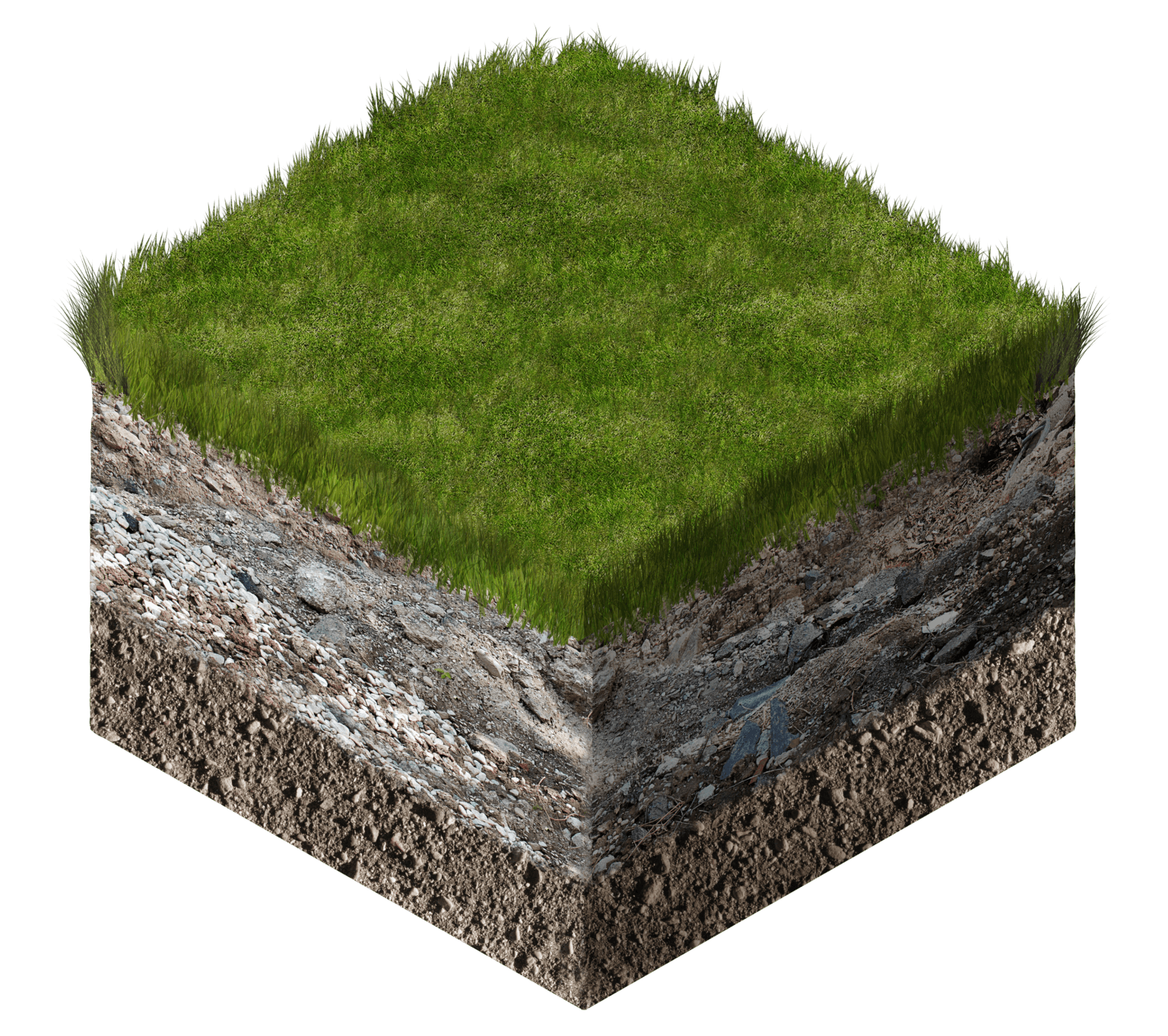
- Silt soil: It is made of medium-sized particles and has a smooth texture. It has a good amount of fertility and can hold water for long. This cohesive soil can be found commonly in riverplains and flood valleys.
- Clay soil: Clay soil is rich in nutrient levels and offers high water-holding capacity with the best soil permeability level. The soil is usually heavy and its strength is very high when it is dry.
- Loamy soil: It is the mixture of the above three kinds of soil i.e. sand, slit and clay. It has a good texture and contains moisture and nutrients. It is versatile and is ideal for the foundation of structural buildings.
- Peat soil: It is also known as gravel soil and is formed with the natural decomposition of plant matter. It is acidic and offers high organic nutrients. It is mostly found in wetlands. It is compressible and not considered ideal for foundations.
What are the most common key characteristics of soil?
Different soil characteristics help civil engineers determine the quality of soil and give them an understanding of their properties. The following key characteristics are important so that the engineers can make an informed decision.
- Particle size: Soil made up of different particle sizes reacts differently when used in application. Soil with larger particles is stronger due to friction while soil with fine particles is sensitive to water. It helps in determining soil strength for civil engineering applications.
- Permeability: It is the amount of water which can flow through the soil. Permeability and strength of soil play an important role in depicting the slope behaviour and it helps to prevent slope failure.
- Compressibility: Soil getting rearranged in a more compact form due to dynamic force or change in water levels is known as compressibility.
- Load-bearing capacity: The capacity of soil to bear the load applied on the ground above is known as the load-bearing capacity of the soil. It depends on the type of soil and its density.
- Susceptible to erosion: Erodibility plays a crucial role in evaluating the erosion potential of soil and how soil erosion can be prevented. This is important to avoid catastrophic failure of structures built on weak soil.
Which soil type is ideal for its application in the foundation of buildings?
A building can only be strong if the foundation on which it is laid is rock-built. Owing to the different characteristics of soil types it is vital to know which can be used when:
- Sand or gravel has the biggest particle size and is strong due to inter-particle friction. Water drains quickly and it offers stability, thus becoming an ideal choice for the foundation of buildings.
- Clay soil has small-sized particles and can hold water for longer durations. As this soil can contract and expand in different seasons it causes cracks or fissures and is usually used deep inside the ground to provide support.
- It has the perfect mixture of sand, silt and clay and is one of the strongest soils for laying down the foundation of structures. It doesn’t change or shrink when it comes in contact with water and thus provides great stability throughout.
- Usually found in wetlands, peat soil offers low bearing capacity and constructions made on this type of soil pose a great risk of damage.
What are the various soil improvement techniques?
- Compaction: Soil compaction is a process where soil particles are pressed together to reduce pore space between them. This increases the water density level and reduces infiltration.
- Stabilisation: Improving the quality of soil by adding essential stabilising components is known as stabilisation This improves the overall physical soil structure.
- Geosynthetics: Soil testing is done to determine the quality and then synthetic products are added to the terrain to make it better and the process is known as geosynthetics. Civil engineering soil applications are done after the soil is made healthy again with this process.
- Drainage: It reduces the liquefaction hazard by increasing the draining ability of soil. If the pore water in the soil can drain freely it increases the soil’s strength. It is done with the installation of drains of gravel, sand and synthetic materials.