
Reinforced soil walls (RSWs), known as mechanically stabilized earth (MSE) walls, are structures that mix soil with reinforcement materials for better stability in civil engineering. RSWs are used as they resist lateral soil pressure from granular materials and/or earth fills. They offer a cost-effective solution and excel in the complex design of high structures at different elevations.
Principles of Soil Reinforcement
The main principle behind soil reinforcement lies in reducing the lateral pressure by using materials that provide tensile restraining forces to the soil, thereby maintaining stability. When soil is subjected to vertical stress, it tends to deform laterally which can be reduced by incorporating reinforcement elements. Enhancing the shear strength depends on the kinds of materials used in RSW applications such as:
- Steel strips: They are useful for adding tensile reinforcement to heavy-duty applications, such as high retaining walls and to enhance stability.
- Geogrids: These polymer-based structures improve the soil’s ability to bear loads, making them ideal for steep slopes and retaining walls.
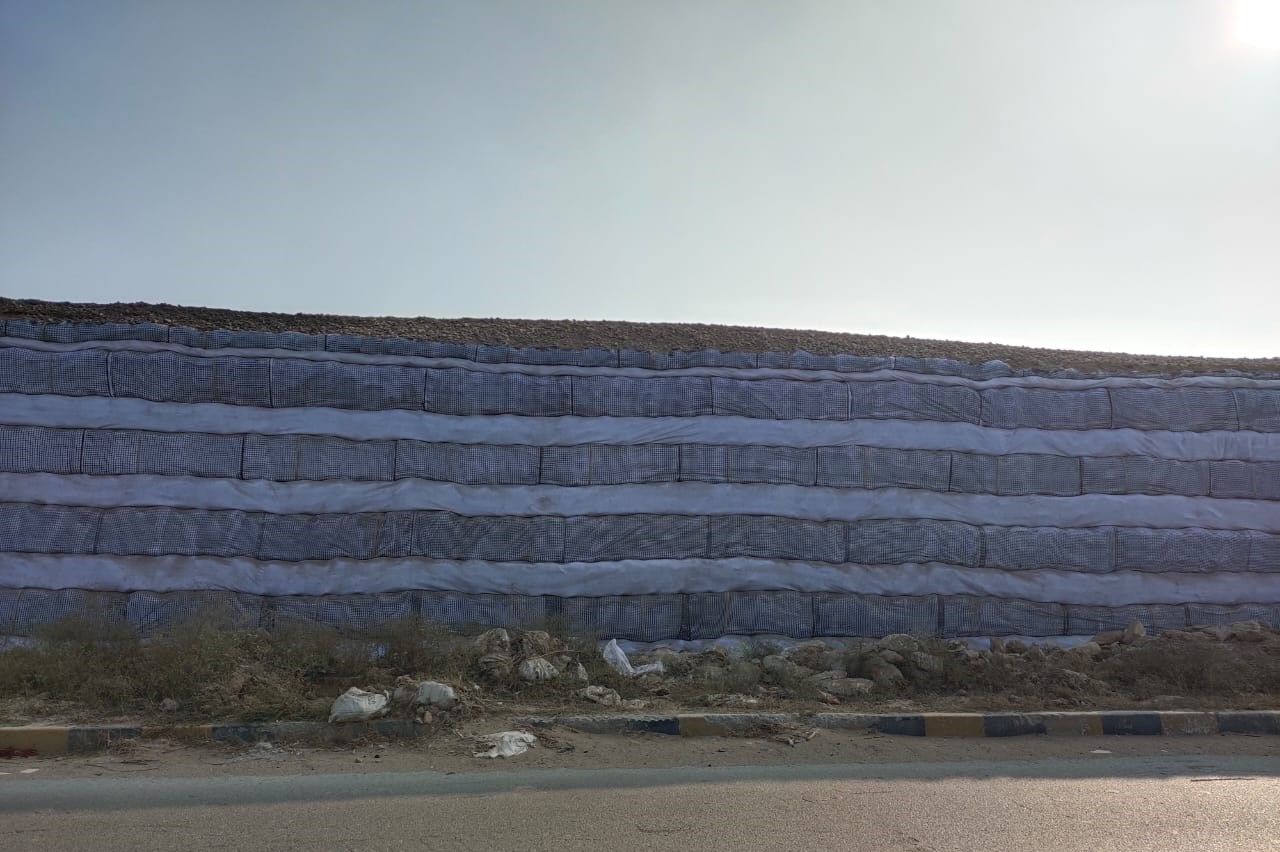
- Geotextiles: To give reinforced soil walls proper drainage and filtration, geotextiles serve as a barrier between various soil layers, also when used with other reinforcement elements, geotextiles provide additional tensile strength.
What are the different types of reinforced soil walls?
Reinforced soil walls are based on the reinforcement materials used and the type of wall facing installation ( that is metallic strips or geosynthetic reinforced walls).
Based on reinforcement materials:
- Geogrid reinforced walls: Geogrid reinforced walls utilize layers of geogrid materials to stabilize the soil, enhancing its bearing capacity and resistance to differential settlement.
- MSE Walls: Mechanically stabilised earth walls is made of compacted aggregate backfill combined with geosynthetic reinforcements. These walls are a good choice due to their high durability and easy installation.
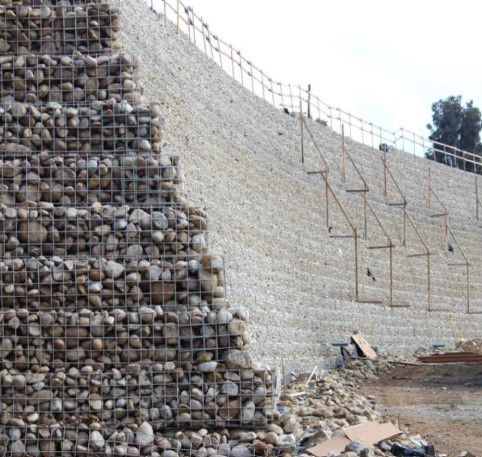
- Gabion-Faced Walls: Gabion-faced reinforced soil walls incorporate wire mesh baskets filled with stones or other materials.
Based on wall facing:
- Modular block RSW: To create a visible building structure, this wall uses concrete wall blocks with geogrids placed between the blocks for layer compaction. The blocks helps in maintenance and repairs and increases longevity of the wall . Landscaping projects and highway embankments use concrete block walls for a durable finish.
- Precast concrete panel facing walls: Precast concrete is used as a facing material in large-scale projects as the precast concrete panels connect the reinforcing layers embedded in the soil. This visible surface is known as the facing panel connection and these walls are ideal for high-load applications in highways, embankments and bridge abutments.
- Wrapped face walls: It uses geotextiles as a wrapping material to provide stability by allowing the wall to adapt to minor deformations. Their layered construction with compacted backfill is appropriate for drainage systems.They are versatile and provide flexibility for various soil-structure interaction projects.
What are the key considerations for designing reinforced soil walls?
Design consideration of a reinforced earth wall involves several critical factors that impact the durability and performance of the structures such as:
- Wall height & load condition: Lateral pressure increases with the height of the wall and it needs robust design strategies. The high load on such structures requires concrete block walls or precast building structures for the necessary strength.
- Reinforcement spacing: The integrity of the wall depends upon the proper spacing of reinforcement layers. In the seismic-resistant walls, additional support is required to achieve stability and thus closer spacing is preferred.
- Backfill type and mechanical interlock: Choosing backfill material such as gravel helps in better grip and load distribution.
- Types of retaining walls: The types in RSW are – block wall, gabion wall or concrete block wall. Gabion walls provide great drainage whereas precast concrete building walls are best for rigid structures.
Designing reinforced soil walls involves ensuring external stability and internal stability against sliding, bearing capacity failure. Choosing the right type of materials and environmentally sustainable retaining solutions always helps in providing a long-lasting durable structure.
What are the steps for the construction techniques for Reinforced Soil Walls?
The detailed process for construction of RSW projects are:
- Site preparation and ground stabilization: The first step is to understand the topography of the area. Soil stabilization is achieved by clearing debris, especially for stoned walls and earthen structures.
- Placement of wall material: Understand the requirements and then choose the appropriate one. For instance, in wall gabion construction, gabion materials provide drainage qualities, whereas block, concrete, or earthen materials are used in RCC structures.
- Layer reinforcement and compaction: Reinforcement layers are installed between the backfill and wall facing to ensure compaction which is essential for brick building construction and construction precast walls.
- Facing alignment: Structural integrity and durability is maintained with careful wall-facing alignment. Alignment helps in stability of concrete and block or precast building facings.
- Mitigating the challenges: Misalignment of facing panels or poor ground-bearing capacity during construction is fixed with proper soil compaction.
Advantages of reinforced soil walls
RSWs are less expensive to construct compared to traditional concrete retaining walls. These walls facilitate quicker construction times as they do not require external structures like scaffoldings or extended curing periods. The flexibility of reinforced soil walls is good for project requirements like embankments, bridges and industrial enclosures. They resist loads, seismic forces, and provide solid safety during calamaties such as earthquakes.