
A geomembrane is a highly impermeable membrane used with geotechnical engineering materials to stop fluid migration and contamination. caps were developed for applications in need of contamination prevention solutions, while withstanding harsh pH. We look into the specific application of geomembrane caps, used for landfill linings. Geomembranes serve slightly different purposes from geotextiles.
What are Geomembrane caps?
A geomembrane cap is an impermeable synthetic membrane liner or barrier used to control fluid migration in man-made sites. Most often, they are used to line landfills and wastewater treatment plants to prevent contaminants from leaching into the surrounding environment, thus protecting groundwater.
Types of Geomembrane materials used for caps
Geomembranes need to withstand a lot of abrasive conditions be it physical or chemical. As a result, the materials used for the manufacture of geomembrane are chosen for their material toughness, and ability to handle such harsh conditions.
- PVC (Polyvinyl Chloride): PVC geomembranes are flexible synthetic liners made from PVC polymers. It is cost- effective, chemical-resistant and easy to install. They are soft and easy to operate and lay which makes them useful for water reservoirs, fish ponds, and temporary containment systems.
- EPDM (Ethylene Propylene Diene Monomer): EPDM geomembranes, made from synthetic rubber is notable for its excellent weathering resistance and flexibility over a broad temperature range. It’s preferred in roofing applications, landscaping, and other outdoor installations.
- HDPE (High- Density Polyethylene): HDPE geomembranes are the most common and preferred choice. It’s made from a highly crystalline form of polyethylene, which gives it a dense and rigid structure. HDPE has high tensile strength, low permeability, and high chemical resistance making it suitable for landfill caps and liners, mining and water containment.
- LDPE (Low- Density Polyethylene): LDPE geomembranes, made from low-density polyethylene, are recognized for its flexibility and ease of installation compared to HDPE. LDPE geomembranes are increasingly favored for use as caps when ground movement is anticipated due to its low permeability, high flexibility, and excellent puncture resistance.
- Bituminous Geomembranes: Bituminous geomembranes are made from asphalt or tar-based materials, often combined with reinforcing fabrics like polyester or fiberglass. It’s useful at providing waterproofing solutions suitable for landfill applications. However, its use is still somewhat nascent.
Key characteristics of a geomembrane
Geomembranes are characterized by low permeability, which stops the movement of liquid or gases making them suitable for landfill liners, containment ponds, and waterproof barriers.
It also has high tensile strength, flexibility, and durability allowing them to withstand punctures, tears, and frictional forces. From a cost perspective, geomembranes are a relatively economical solution than concrete. Geomembranes, also being resistant to thermal degradation and UV damage, ensure long-term performance. Generally, LDPE geomembranes have higher elongation values compared to HDPE.
Applications
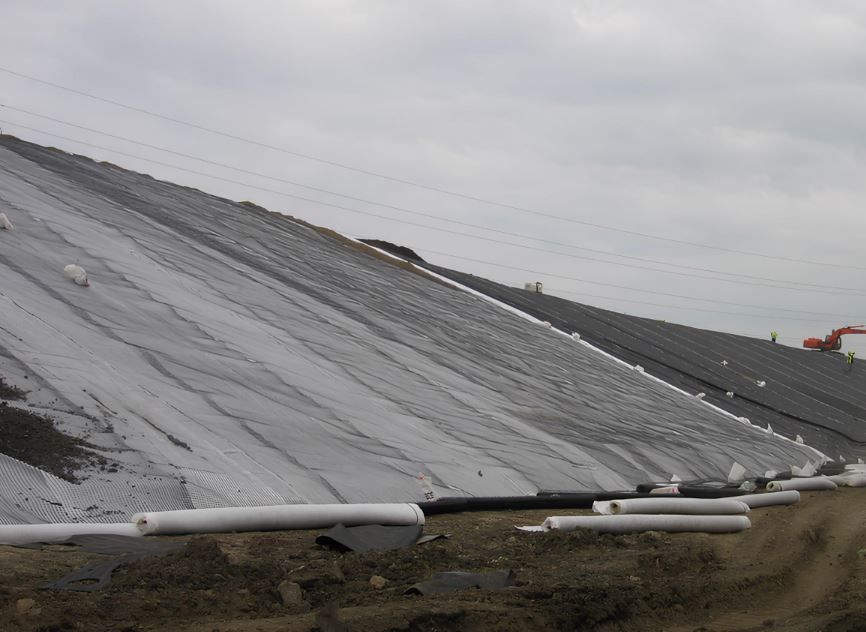
Landfill closure to prevent leachate
Geomembrane caps are applied on top of the waste mass as part of a final cover system to prevent water infiltration. Geomembrane caps provide less infiltration to the landfill, reducing the volume of leachate produced. By redirecting surface water away from landfill cells, geomembranes reduce the risk of contaminations, thereby the integrity of landfill operations. Also, they protect the surface of landfills from the erosive effects of wind and water and minimize the escape of landfill gases such as methane and carbon dioxide.
Slope stabilization
Geomembrane caps with textured surfaces increase the friction coefficient thereby preventing slippage and instability of the slopes. The shear strength of geomembranes also play a critical role in stabilizing the soil and maintaining the angle of repose.
Mining
Geomembranes are used as liners for tailing ponds, where mining by-products are used. It helps rainwater from mixing with the mining materials and protects against wind erosion and dust formation. These are also used as liners for leach pads, where chemicals are used to extract metals from ore. Usually, HDPE liners are used to seal the mine and prevent waste products from contaminating the surrounding environment.
Water retention systems
Geomembrane caps minimize water loss due to seepage; improving overall efficiency in reservoirs, irrigation canals or water storage. The impermeable nature of geomembranes ensures water is effectively contained and managed. Other uses in the water management space includes as liners for potable or reserve water–an essential function for the safe shutdown of nuclear facilities, and as liners for waste liquids, including sewage sludge.
Environmental regulations for geomembrane cap projects
One of the primary regulations to ensure environmental safety includes the Resource Conservation and Recovery Act (RCRA), which regulates hazardous waste management and requires impermeable liners to avoid contaminating groundwater and soil. Additionally, the Clean Water Act (CWA) mandates measures to prevent the discharge of pollutants into navigable waters.
Design consideration
Designing geomembrane caps for landfills involves a careful assessment to ensure optimal performance and longevity.
Thickness and material selection
The type of material used is critical, as different geomembranes offer varying levels of durability, flexibility, and chemical resistance. The presence of yield point in HDPE, for example, necessitates careful consideration, while PVC’s more predictable strain behavior may be advantageous in other scenarios. Thickness is also important, as it impacts the geomembrane’s impermeability and overall performance. The thickness must be chosen based on the requirements of the project.
Chemical resistance
Chemical compatibility of geomembranes with leachate is assessed using EPA Method 9090, which examines the effects of leachate on the materials at varying temperatures over an extended period.
Seam integrity
Seams, where two geomembranes are joined, should be strong and impermeable as poor seam quality can cause leakage. Seams in geomembranes are created using thermal welding methods (such as hot wedge or extrusion welding) to ensure they are as strong and impermeable as the parent material.
Surface texturing
Surface texturing influences the behavior of geomembranes in applications requiring increased friction, enhanced bonding, or specific drainage properties. Smooth surfaces have lower friction, making them suitable for low-angle-slope or base applications. Textured surfaces, which increase interface friction, are essential on steeper slopes to ensure stability and prevent sliding of overlying materials.
Field issues in geomembrane cap design
One significant issue that impacts geomembrane caps is uneven surface preparation, which damages geomembrane liners by causing punctures or tears. Failures in the geomembrane cap manifest in multiple forms, such as global slides on a geomembrane cap or geocomposite drain, subsoil piping, topsoil collapse, and swale berm washouts and gullies. These issues often stem from uncontrolled water movement through the cover soils.
Another challenge is the movement and shifting of the geomembrane liner or the associated geotextile components within the cap system. Proper anchoring and securing of the fabric are essential to keep it in place. Punctures are also a common problem, often caused by sharp rocks or improper handling. Smoothing the ground and avoiding the use of machinery on the liner can mitigate this issue. Routine maintenance and proper material selection are key strategies to prevent and address these challenges.
The use of geomembrane caps in environmental protection projects underscores the importance of selecting the right materials and adhering to regulatory requirements to ensure project sustainability. As regulatory pressures and environmental standards continue to evolve, the role of geomembrane caps in protecting natural resources and human health will only become more critical.