
Crocodile cracking: definition, and causes of crocodile cracking
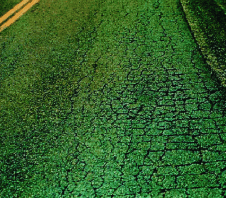
Crocodile cracking, also known as alligator cracking, is a type of asphalt pavement distress that takes the form of interconnected cracks resembling the skin of a crocodile. It typically occurs as a result of repetitive stress and flexing of the asphalt surface under vehicular loads. The cracks can persist through various stages:
- Initial stage: Fine longitudinal cracks resembling hairline fractures.
- Intermediate stage: Cracks interconnect, forming a network known as spalling.
- Advanced stage: Severe, pronounced cracks with asphalt chunks detaching, posing safety hazards.
This type of cracking is often localized and indicative of structural issues within the pavement.
image
What are the primary causes of crocodile cracking?
Crocodile cracking is primarily caused by fatigue stress due to repeated vehicular loads. Other contributing factors include:
- Temperature variations: Freeze-thaw cycles cause expansion and contraction of the asphalt, creating stress within the pavement structure.
- Water intrusion into the subgrade: Water seepage softens the subgrade, compromising its load-bearing capacity and triggering surface deformation.
- Subgrade weakness: A poorly prepared or weak subgrade cannot adequately support the overlying asphalt, making it susceptible to deformation and cracking.
- Traffic- induced stress: Heavy and repetitive vehicular loads create tensile strain within the asphalt layers, causing cracks to propagate over time.
- Construction quality: Inferior materials, inadequate compaction, or insufficient thickness of asphalt layers during construction can hasten the onset of crocodile cracking.
Repeated flexion under traffic accelerates the propagation of cracks, eventually forming the distinctive crocodile skin pattern.
How can crocodile cracking impact road usability and safety?
Crocodile cracking significantly affects both the functionality and safety of roads:
- Reduced pavement integrity: Cracks compromise the load-bearing capacity of the pavement, making it unsuitable for heavy traffic.
- Increased maintenance costs: Advanced-stage cracking requires extensive repairs, such as reconstruction or subgrade stabilization.
- Safety hazards: Loose chunks of asphalt can cause accidents, particularly for two-wheelers.
What is the difference between wheel path and non-wheel path cracking?
Wheel path cracking
It occurs along the highway length where vehicle tires often pass. The deformation is primarily induced by fatigue stress resulting from repeated loads.
Non-wheel path cracking
Develops parallel to the center of the pavement, but outside wheel paths. This type is often associated with moisture content or poor construction quality for subgrade problems.
What is the difference between fatigue cracking and reflective cracking?
Fatigue cracking (Crocodile cracking):
Caused by repetitive stress, it originates in the subgrade and propagates to the surface.
Reflective cracking:
Occurs when an asphalt overlay is applied over existing cracks. The original cracks reappear on the new surface due to underlying issues that remain unaddressed.
Which roads are most prone to crocodile cracking?
Certain types of roads and surfaces are more susceptible, including:
- Airports: High-stress areas with repeated heavy loads from aircraft.
- Haul roads: Used for transporting heavy materials, leading to fatigue stress.
- Industrial areas: High traffic and heavy machinery loads.
- Waterlogged residential roads: Prolonged moisture exposure weakens the subgrade.
- Busy intersections: High traffic density increases stress cycles.
What are the common solutions to crocodile cracking?
- Asphalt resurfacing: An overlay might temporarily eliminate surface cracking but cannot penetrate problems at the subgrade level. Persistent subgrade problems can lead to reflective cracking.
- Structural repairs: In later stages, it is typically necessary to excavate and reconstruct subgrade to ensure long endurance.
- Geogrid reinforcement: Embedding geogrids inside the pavement structure is one of the proactive preventive measures against crocodile cracking.
How can geogrids help mitigate crocodile cracking?
Geogrids are geosynthetic materials used to reinforce asphalt pavements. They play a crucial role in preventing crocodile cracking by:
- Stress distribution: Geogrids evenly distribute tensile stresses across the pavement, reducing localized strain concentrations that lead to cracking.
- Improved load-bearing capacity: By reinforcing the asphalt layers, geogrids enhance the overall structural integrity of the pavement.
- Longevity of pavement: Geogrid reinforcement delays the onset of fatigue cracking, extending the pavement’s service life and reducing maintenance costs.
- Enhanced interlock mechanism: Geogrids interlock with the asphalt and subgrade materials, providing additional resistance to deformation.
How does water infiltration worsen crocodile cracking?
Water infiltration affects the subgrade and asphalt layers by:
- Softening the subgrade: Saturated subgrades lose their load-bearing capacity, leading to deformation under traffic loads.
- Freezing and thawing: Water freezes during low temperatures, expanding and causing cracks. Thawing in warmer weather exacerbates the issue.
- Accelerated cracking: Moisture trapped within cracks weakens the surrounding asphalt, making it prone to further damage.
What are the repair methods for crocodile cracking?
To minimize reflective cracking:
- Reinforce the asphalt overlay with geogrids.
- Ensure the subgrade is adequately repaired before applying the overlay.
- Use crack-relief layers to reduce stress propagation from underlying cracks.
Crocodile cracking is a typical problem found in asphalt pavements, resulting from continuous stress, the infiltration of water, and weaknesses present in the subgrade. Understanding the causes and effects of this problem adopt appropriate preventive measures. Geogrid integration, proper drainage provision, and adherence to the best practices of construction reduce the occurrence of this type of cracking, thereby elongating the life of pavements and reducing the cost of repairs. A highway requires proper care and modern reinforcement solutions, such as the use of geogrids, in order to be safely used for centuries.