
Biplanar drainage nets are geosynthetic materials used in civil engineering to improve water management, slope stabilization, and green roof systems. These innovative nets are designed to reduce erosion and ensure stability in geotechnical projects due to their unique structure, which facilitates efficient soil reinforcement and water drainage.
What are geonets?
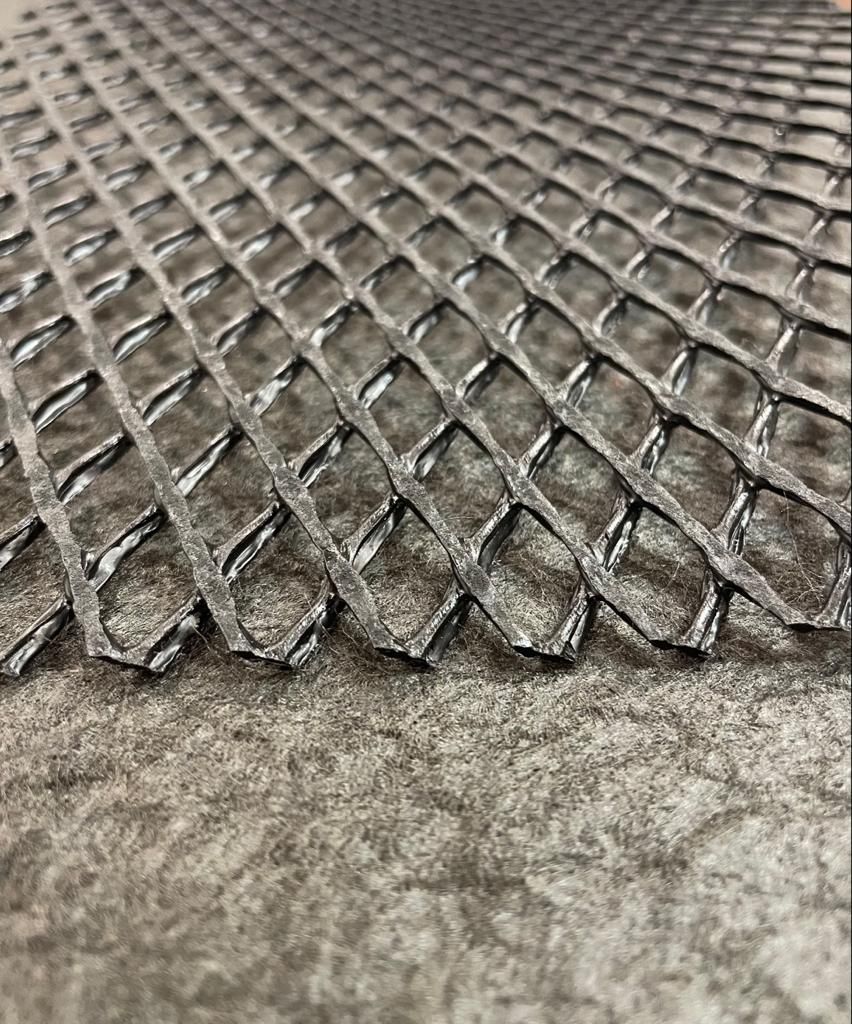
Geonets are advanced geosynthetic materials made primarily from high density polyethylene (HDPE)
or polypropylene. They are arranged with a grid-like structure consisting of ribs or channels that create a three- dimensional network. They are primarily used for drainage, retaining walls, asphalt work, dams, landfill liners, and other geotechnical applications, as they allow surplus water to flow through their mesh-like structure. Typically, they are part of drainage systems designed to control and direct the flow of liquids, whether water or chemicals. This unique structure provides efficient in-plane drainage by optimizing transmissivity, enabling effective regulation of water and other liquid flows. Geonets must exhibit strong creep resistance and compressive strength to withstand long-term stress and pressure in engineering applications.
Types of geonets
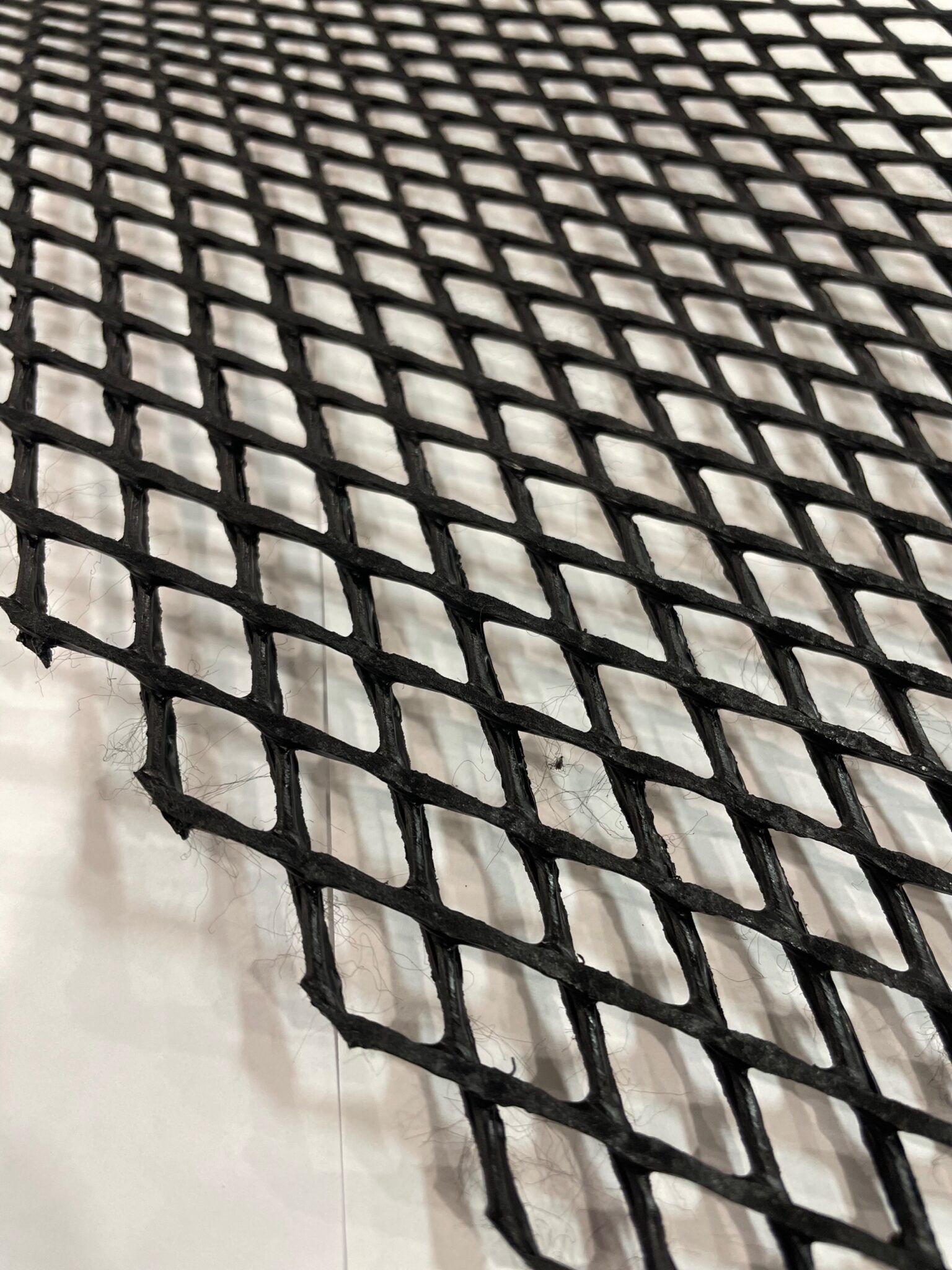
Geonets can be categorized into four types based on the structure, use and requirement of the various civil engineering projects.
- Bi-planar geonets: Bi-planar geonets are two-dimensional structures consisting of two flat, parallel layers designed to allow water to flow in both horizontal and vertical directions. They are widely used for creating drainage channels.
- Tri-planar geonets: Tri-planar geonets are three-dimensional structures with two outer layers of ribs and one internal layer of cross ribs that connect them. They are widely used to manage high flow rates and provide additional stability.
- Polymeric geonets: Polymeric geonets are manufactured from single polymers and are used for landfill drainage and wall retention. These are widely opted for their durability, chemical resistance and lightweight properties.
- Composite geonets: Composite geonets are created by integrating polymeric geonets with geotextiles and are widely used for drainage, soil separation, and filtration. They are available in various thicknesses and widths and are considered stronger and more stable compared to other geonets.
Manufacturing process of geonets
The manufacturing process of geonets involves several steps, including:
- Material selection: The process begins with selecting high-quality polymers that are durable, chemical-resistant, and lightweight.
- Extrusion: During the process, raw materials are melted to form a sheet or film. This step is vital as it dictates the thickness and texture of the geosynthetics.
- Orientation: This step involves stretching the material to enhance its strength and drainage capabilities.
- Cooling: The cooling process ensures that the material retains its properties by typically using water or air cooling methods, depending on the prerequisites.
- Stabilisation: Stabilization involves enhancing the geonet’s resistance to environmental factors, making it suitable for stable performance even under harsh conditions.
- Punching and cutting: Geosynthetics are cut into specific dimensions according to the stipulation of projects like drainage in landfills, retaining walls etc.
What are biplanar drainage geonets?
Commonly known as biplanar nets, biplanar drainage geonets play a vital role in sustainable construction practices. These geonets deliver long service life because of their resistance to harsh UV rays, chemical exposure and environmental degradation. The energy efficiency afforded by biplanar nets is becoming more apparent, as the demand for durable infrastructure increases.
Benefits of biplanar drainage geonets
- Cost effective: Compared to other drainage methods, biplanar nets require less backfill material, resulting in lower maintenance and repair costs. Their versatility and adaptability also contribute to overall cost-efficiency.
- Environmental protection: Biplanar nets play an essential role in stormwater management as geonets facilitate the movement of water and promote groundwater recharge. By stabilizing soil, geonets prevent fertility loss and help preserve natural habitats.
- Recyclability: Since it is made from HDPE, these geosynthetic materials are fully recyclable. Hence, it contributes to reducing plastic waste and conserving natural resources.
- Durability: Biplanar nets are resistant to chemicals and UV degradation as they are made from HDPE. This ensures a long service life which reduces the need of frequent maintenance.
- Lightweight: These are lightweight which makes them easy to handle and thereby quick and efficient installation, reducing labor requirements. They are also used as additional shielding for waterproofing membranes.
Applications of biplanar nets
Being versatile geosynthetics, biplanar geonets are widely used in various applications.
- Landfill drainage: Biplanar geonets play an indispensable role in preventing leachate drainage. Due to their ribbed geometry, they allow multidirectional flow, reduce hydrostatic pressure, and help prevent groundwater contamination. They are widely utilized for flat drainage applications like the core of a landfill or a leachate pad in mining scenarios and thereby prevent the water build up.
- Slope stabilization: In geotechnical engineering, biplanar nets are used for embankments, retaining steep slopes, and walls, as they help regulate surface water runoff and reduce the risk of landslides. They also offer additional tensile strength and soil reinforcement. These nets also amplify the stability and load bearing capacity of various infrastructures.
- Erosion control: Biplanar nets provide additional support to the soil and prevent soil particles from being washed away making way for erosion control. They also provide a clear path for water to escape, reducing hydrostatic pressure buildup. They also foster vegetation growth by allowing water to reach plant roots.
- Green roof systems: Biplanar drainage geonets are ideal for green roof applications due to their ability to regulate water flow, prevent waterlogging, and provide structural support to the roof’s soil and vegetation, contributing to energy efficiency and urban biodiversity.
Limitations of biplanar geonets
There are some limitations and challenges associated with biplanar geonets. They are:
- Limited load bearing capacity: Biplanar nets may have a lower load-bearing capacity compared to other drainage solutions. This can be a concern in heavy traffic areas.
- Potential clogging: Sometimes, biplanar nets may experience clogging if not paired with appropriate geotextiles. This causes the abatement in efficiency over time.
- Environmental conditions: Under harsh environmental conditions, these geonets may degrade faster, affecting their long-term reliability.