
What is geocell?
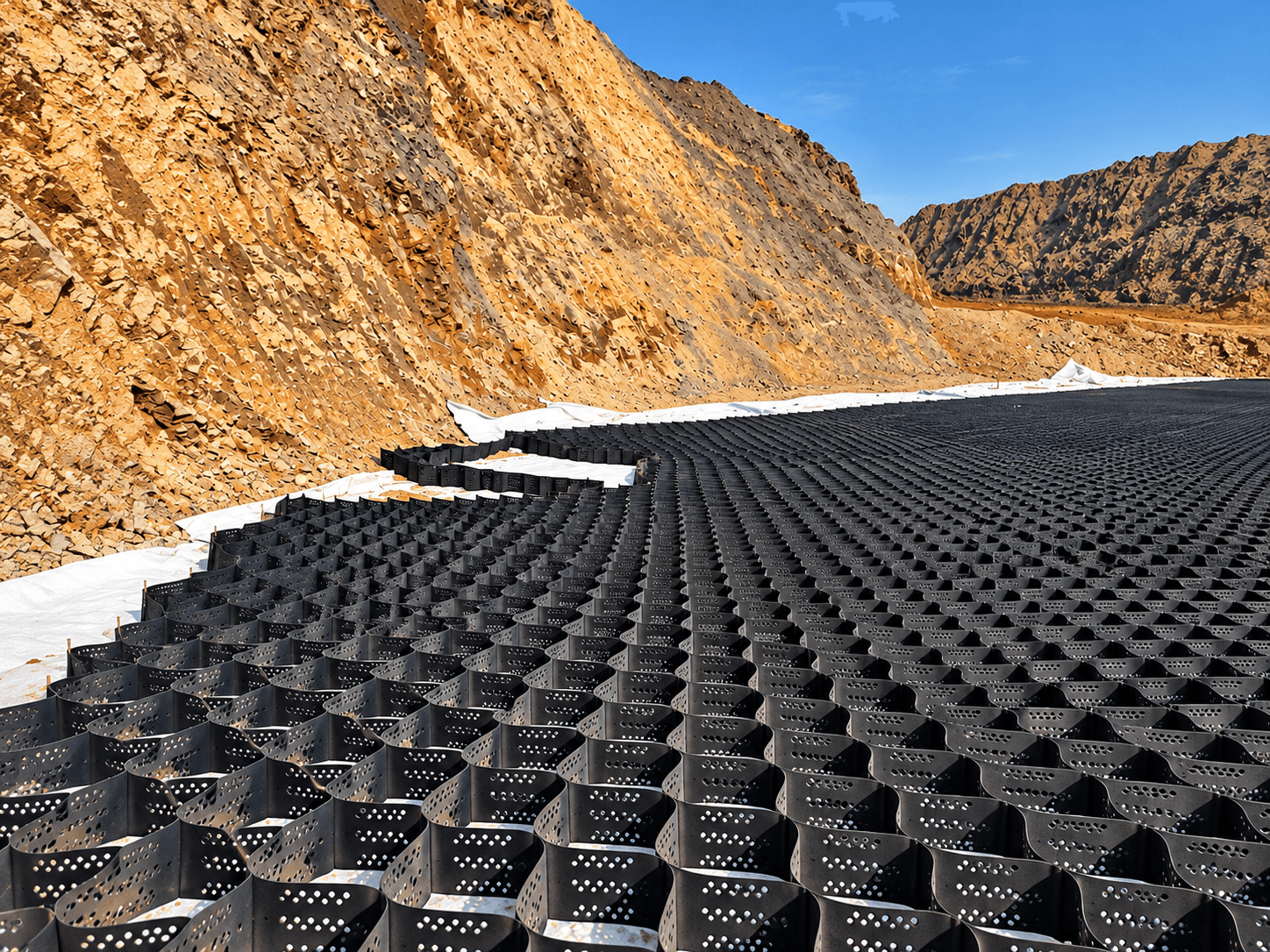
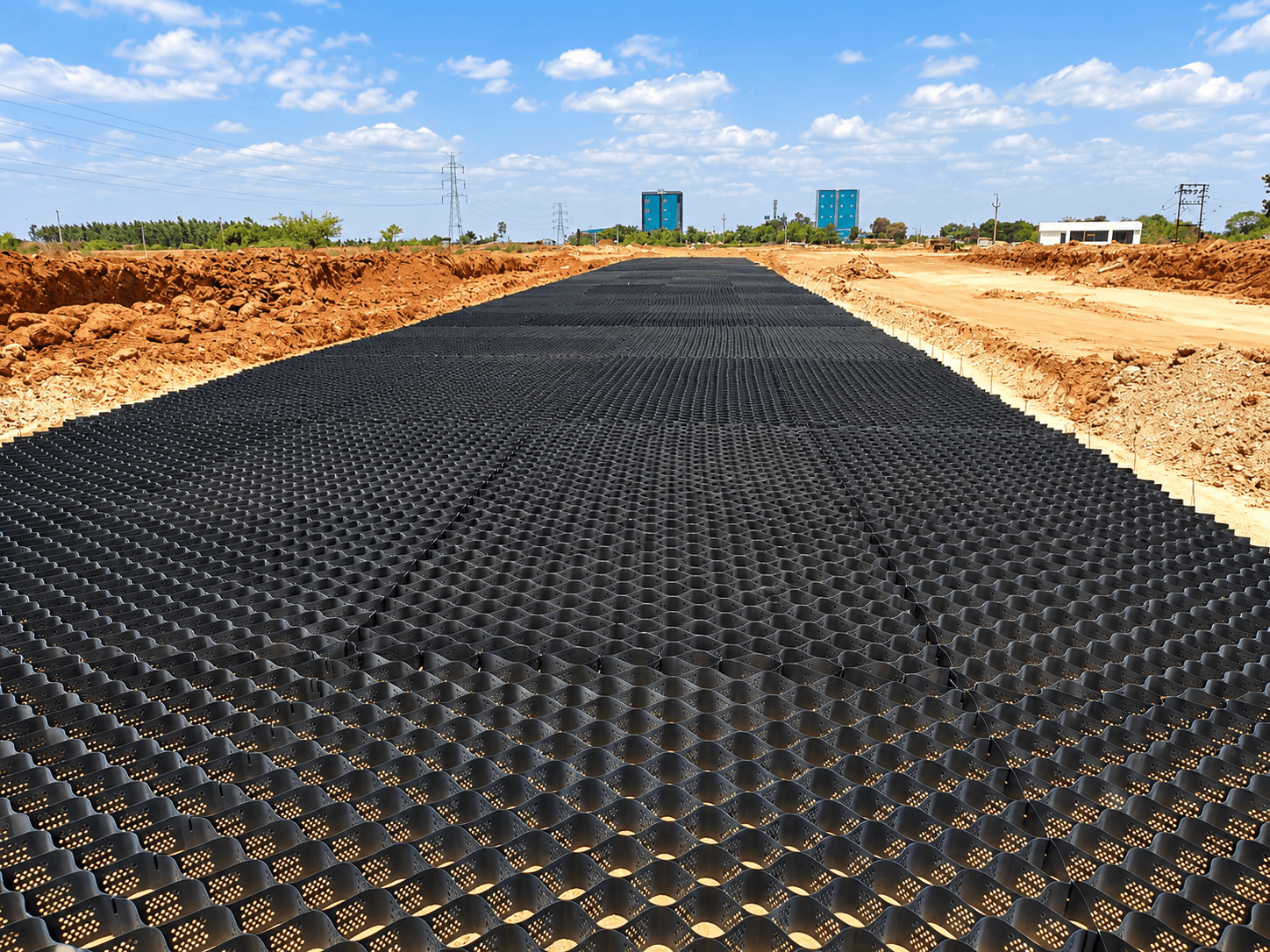
A HDPE geocell (made from high-density polyethylene) is a three-dimensional cellular confinement system (also known as CCS) used in civil engineering and geotechnical applications. This class of geosynthetic structures was primarily designed for soil stabilization, erosion control, and load support. Inspired by Mother Nature, these honeycombed-shaped restraint systems contain perforations which allow water, or other fluids to pass through it; anchoring the infill into the soil, or subgrade firmly.
It should be noted that geocells collapse without any material inside them. Once they’re filled with infill, each cell expands to contain the contents. Through this interconnected web of structures that can hold various types of materials such as aggregate, gravel, concrete, or even local materials in situ, in addition to soil, geocells distribute loads effectively.
Strata Geosystems Geocells

Strataweb
How do geocells work?
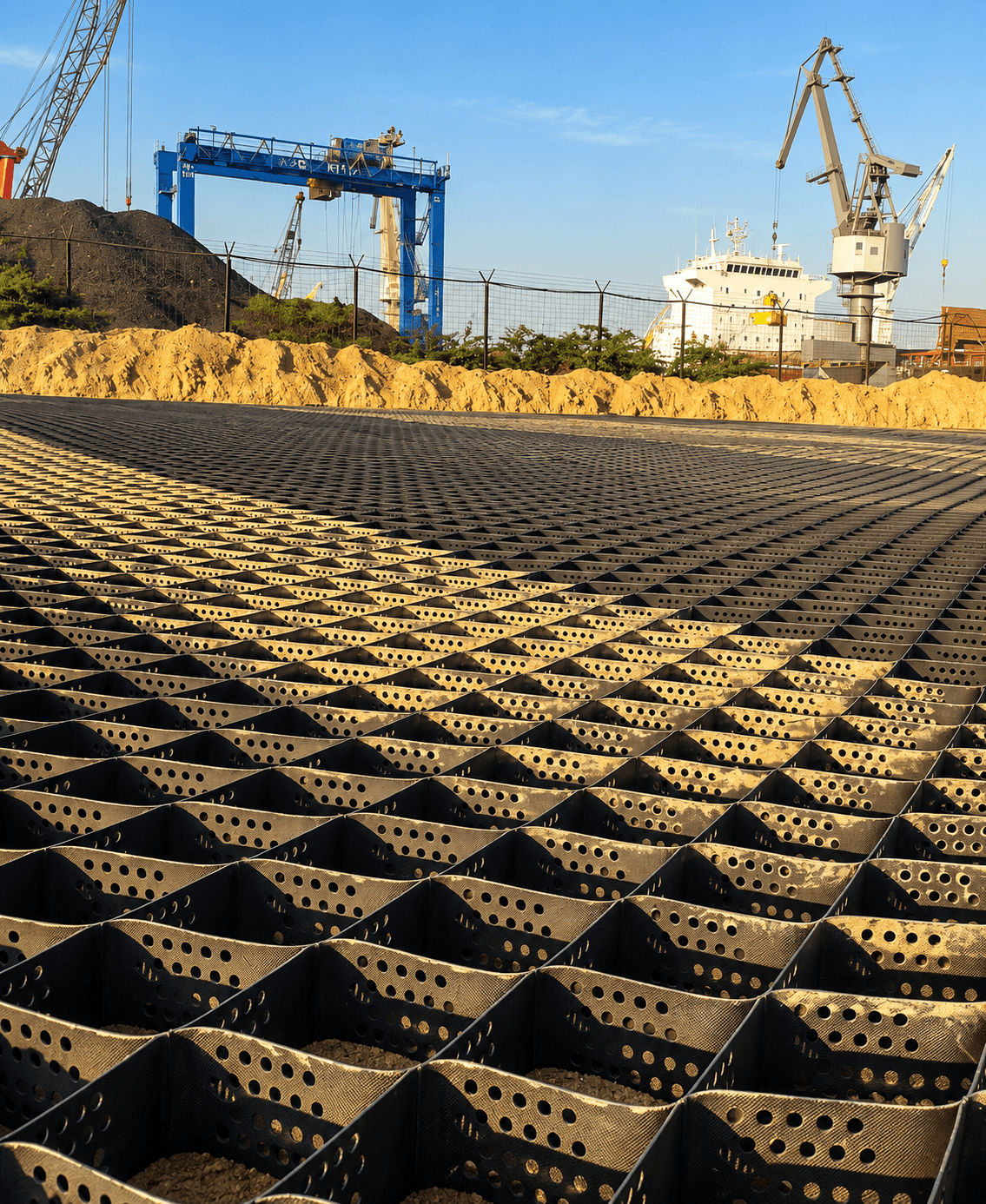
Geocells were engineered for the dual role of soil stabilization and to prevent soil erosion. In the absence of geocells, soil would need stabilization by excavation, reinforce the soil through mechanical compaction, or chemical processes, and followed by other mechanical processes, depending on the site.
Geocells have revolutionized civil construction for various industries through their three core functions for soil stabilization:
Geocell serve 3 purposes
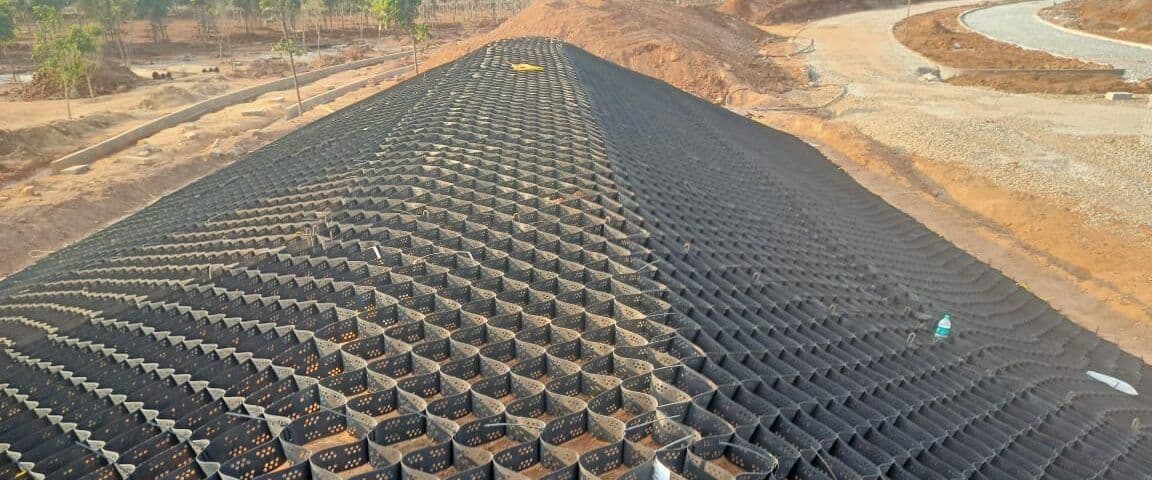
It restricts lateral movement of the in-fill material. Through this limited movement, soil or in-fill content retains stiffness, and improves the density of the material. Think of it as a mattress working to spread the load across the surface area, through each of its pockets. With confinement, we see improved values of friction through the soil-geocell interaction, and shear resistance because it enables reinforcement.
With passive confinement, wherein the geocells limit movement, causes the soil to compress and resistance to deformation. Through this reinforcement, from the geocell walls, the honeycomb structure can transfer loads easily.
Drainage is a key function and design of geocells. The geometry of the product, pore sizes and location (among other factors) determine the relative strength of each individual structure, and resultant strength across the network. When liquids such as water run through each individual unit, it helps to reduce pore pressure, and soil instability. In the long run, having effective drainage systems in any soil structure ultimately is one of the most important determinants of its long term stability.
Over time with repetitive loading, geocells actively confine soil, which minimizes settlement and resulting deformation.
For earth retention, and to prevent erosion, geocells work by offering surface protection through fascia vegetation and minimizing surface degradation. This is achieved by covering the soil surface and shielding it from wind, water or other elements. Its cellular structure traps soil particles; and the pores keep water running, while retaining the soil within and preventing runoff.
Confinement
What factors affect a geocell’s performance?
No two geocell brands are the same, even if they are priced the same. A well-made geocell strip combines high flexural modulus materials with optimized structural design, without which a geocell will eventually lead to failures or other civil engineering challenges.
We start out with high-quality HDPE polymers, which are extruded and welded at joints. The final quality of a geocell itself is affected by a number of mechanical factors. The fabrication quality of the geocell, in turn, affects its performance and the stability of the soil. Often, engineers choose inexpensive options, assuming that the standard is the same. However, it’s our experience of being India’s largest geocell manufacturer that allows us to produce the most superior standard HDPE geocells with industry-leading tensile strength beyond the ISO and ASTM standards, thanks to our stringent quality control. Our geocells, much like our other geosynthetic products, have a cachet of approval from global government bodies.
1. Material properties
Both the extrusion process and the material, i.e. HDPE molecular structure renders a geocell structure in a way that makes it resistant to deformation and bending, known as flexural modulus. This flexural modulus ensures that the product maintains its shape under load.
Success Stories
Infrastructure demands solutions that perform under pressure. See how our certified systems and expertise have delivered long- term stability in projects across the globe.