
Key advantages of slope lining
Controls surface erosion
As runoff accelerates downslope, shear forces increase and begin to displace unprotected soil. When these go beyond the limits of soil resistance, erosion begins. Cellular confinement restricts lateral particle movement and increases resistance to shear-induced surface migration. Where higher hydraulic velocities occur, concrete infill can be used without forming large monolithic slab panels.
Accommodates minor differential settlement
Rigid lining systems transfer stresses directly to the supporting subgrade. When the foundation soil settles unevenly, cracking typically follows. Once cracks develop, continuity is lost, and localised instability may initiate.
A geocell-based lining behaves differently. Because the infill is contained in interconnected cells, stresses are spread out across a composite layer instead of being focused on one plane. Minor differential settlements can be handled without large-scale brittle fracture as long as the crest anchorage, toe restraint, and drainage detailing are done correctly.
Reduces dependence on concrete
In conventional systems, stability is largely achieved through mass. The improvement in apparent shear resistance and load distribution allows the surface layer to perform efficiently without excessive thickness.
In some applications, concrete thickness can be reduced. In others, vegetated or granular infill is sufficient where hydraulic shear demands permit. Material selection should be based on calculated boundary shear stress and expected flow conditions.
Practical installation
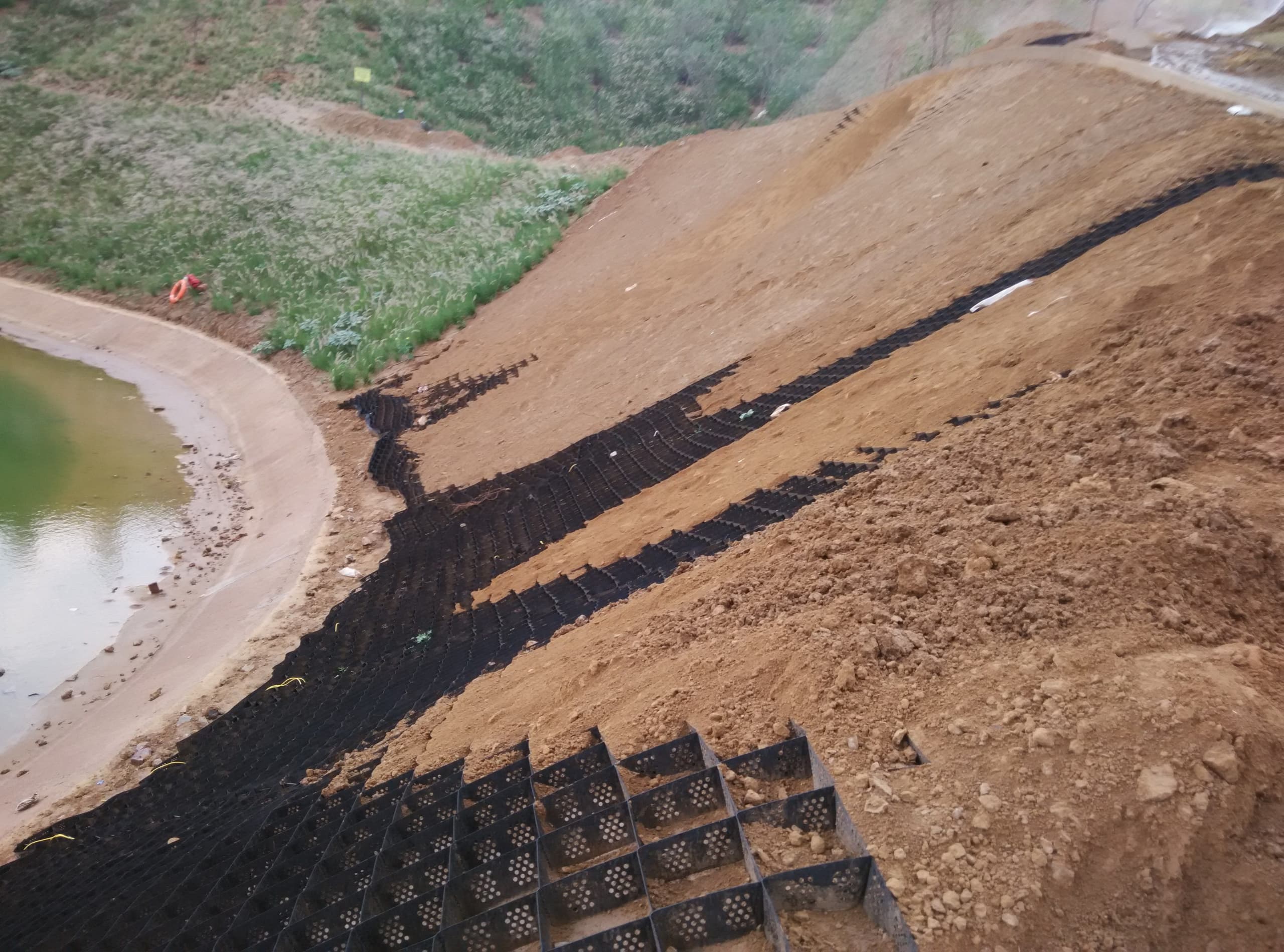
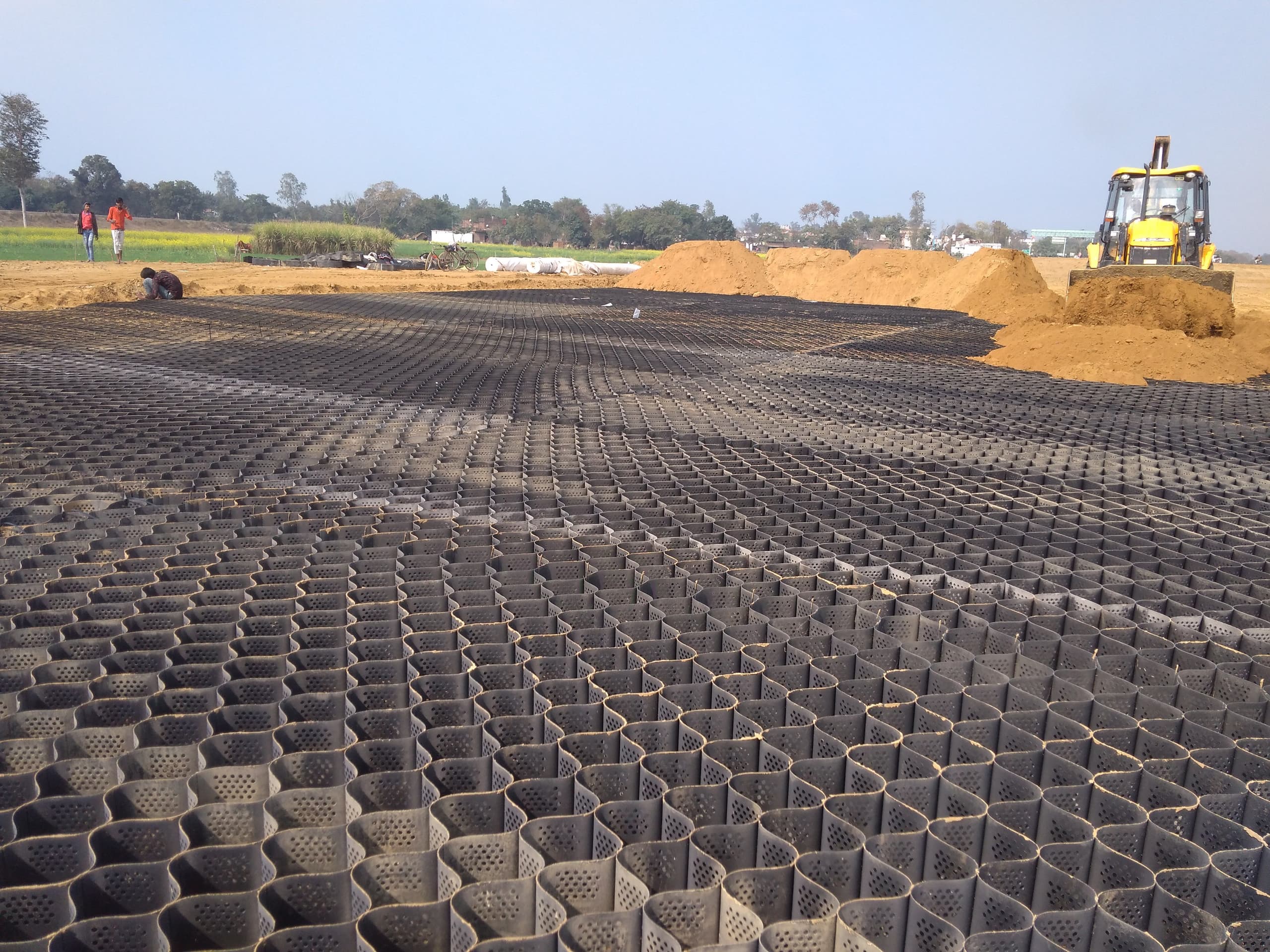
StrataWebpanels are delivered in a collapsed configuration and expanded directly over the prepared slope. This reduces transport volume and simplifies handling, particularly in constrained or remote locations.
Because the system conforms to the underlying geometry, it adapts to curves and irregular slopes without complex formwork. Anchorage at the crest and toe should be designed based on calculated tensile forces, hydraulic uplift pressures, and pullout resistance to ensure long-term stability under service loading. As with any slope system, performance ultimately depends on careful installation and sequencing in the field
Durability and service performance
The geocells are manufactured from polymeric materials widely used in geotechnical construction. Where the system carries sustained tensile forces, the long-term behavior of the polymer becomes important. Over time, polymers deform gradually under constant load, so design strength must account for creep, installation damage, chemical exposure, and environmental effects.
When buried or otherwise protected from prolonged exposure and installed in accordance with specifications, the system provides stable service performance with routine inspection. Comparative assessments within the geosynthetics industry show that these systems can reduce embodied carbon compared to conventional mass concrete, depending on the design and material quantities used.
Strata Geosystems’ solutions for slope lining systems
Slope lining systems are used to protect exposed soil surfaces from erosion and hydraulic forces that develop during rainfall, runoff, and channelized flow. In canals, drainage channels, and embankments, runoff and channelized flow increase boundary shear stresses along the slope face. When applied hydraulic shear exceeds the critical shear resistance of the exposed soil, progressive erosion begins.
Rigid concrete linings have traditionally been used for this purpose. Their performance relies primarily on structural mass and flexural stiffness. Under uniform and stable support conditions, such systems can perform adequately. However, field conditions are rarely uniform. Shrinkage, temperature variation, and differential settlement can induce cracking. If drainage or joint detailing is inadequate, water ingress may generate hydrostatic pressures, reducing subgrade support and leading to localized uplift.
During high flows, the forces acting along the slope face increase noticeably. If these forces are not properly resisted at the crest, toe, and panel interfaces, movement can begin. Long-term reliability comes down to sound anchorage, well-detailed edges, and continuous subsurface drainage.
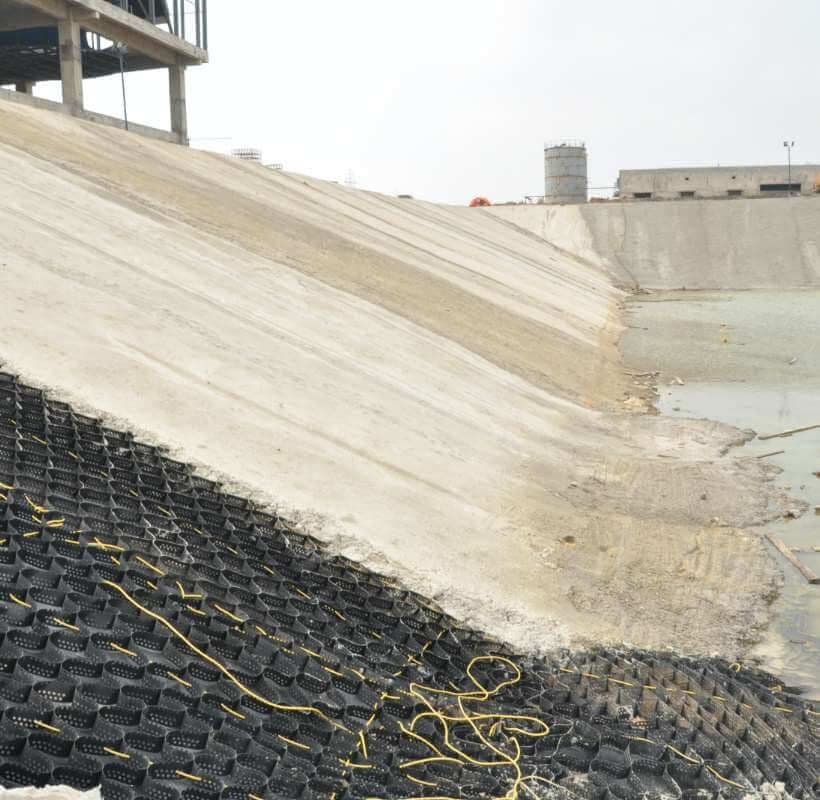
Strata Geosystems addresses these performance constraints through a slope lining system based on three-dimensional cellular confinement using StrataWeb. Geocell panels are expanded over the prepared surface, anchored appropriately, and filled with topsoil, granular aggregate, or concrete, depending on the hydraulic design requirements.
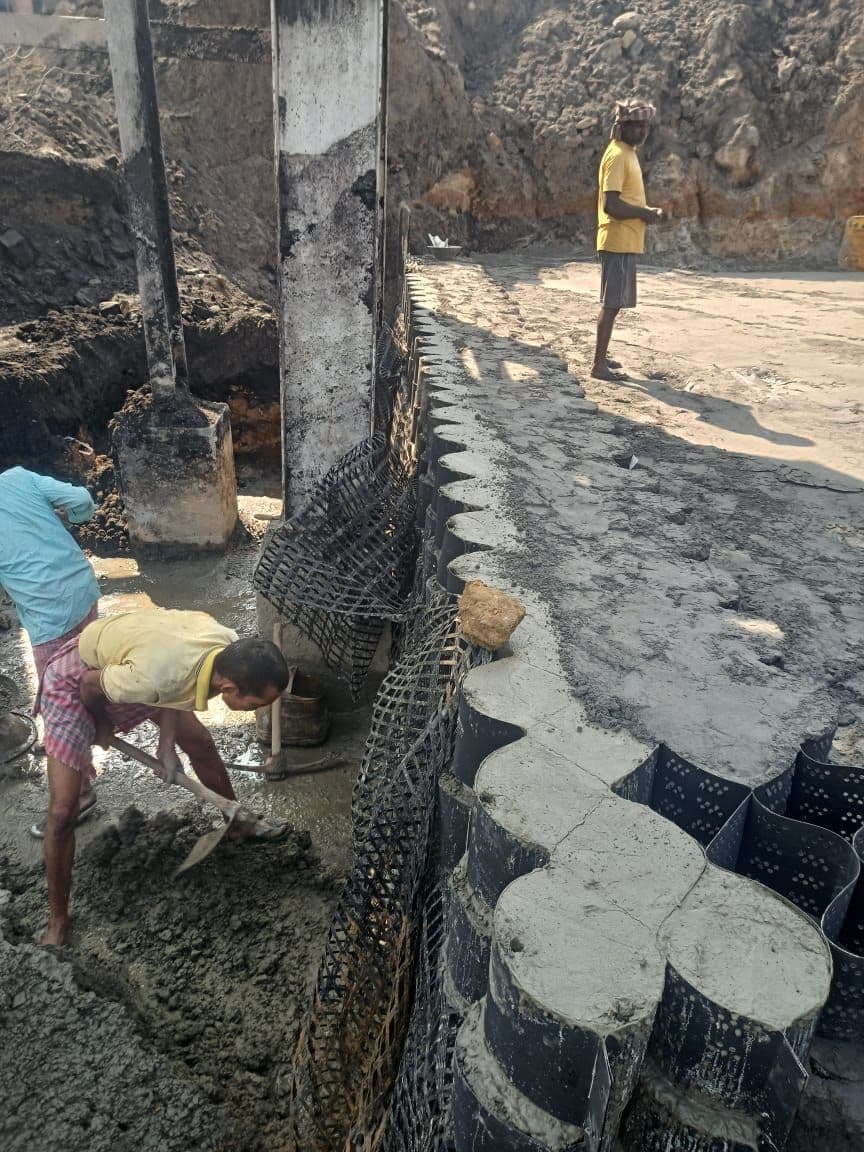
Once the cells are filled, the material is held in place by lateral confinement within the interconnected structure. This confinement limits outward deformation, increases the critical shear resistance of the surface layer under hydraulic loading, and distributes applied stresses more uniformly across the subgrade. In concrete-filled configurations, the cellular geometry subdivides the slab into smaller confined panels, limiting crack width and spacing while reducing the risk of uncontrolled monolithic cracking. As the system retains flexibility, it can tolerate minor differential settlements without breaking when anchorage and drainage are properly designed. In this approach, surface protection is achieved through confinement and composite action, not mass alone.
Applications for Slope Lining
StrataWeb slope lining systems are used in a range of hydraulic and infrastructure environments, including:
Canal and drainage channel slopes
Highway and railway embankments
Hill slopes and cuttings
Riverbanks and flood protection slopes
Landfill embankments
Industrial and urban infrastructure slopes
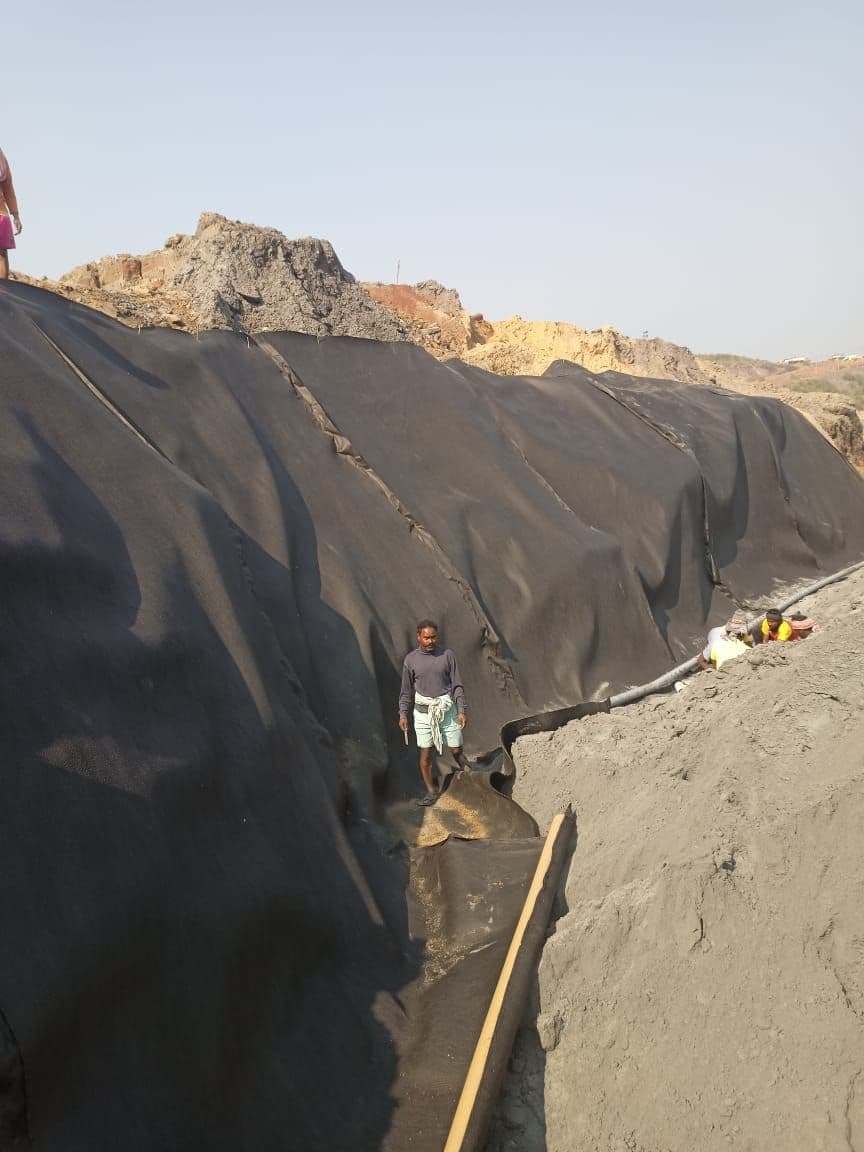
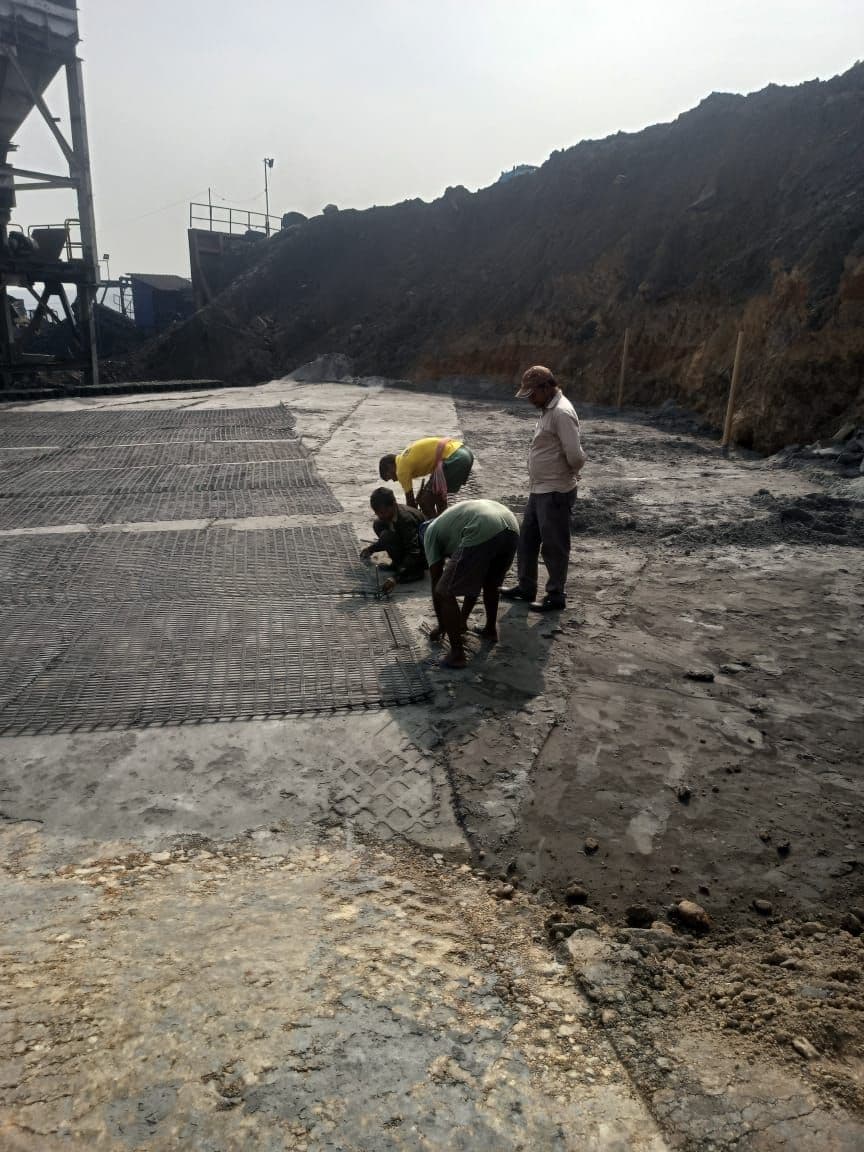
Gallery of slope lining projects
Products used in Slope Lining
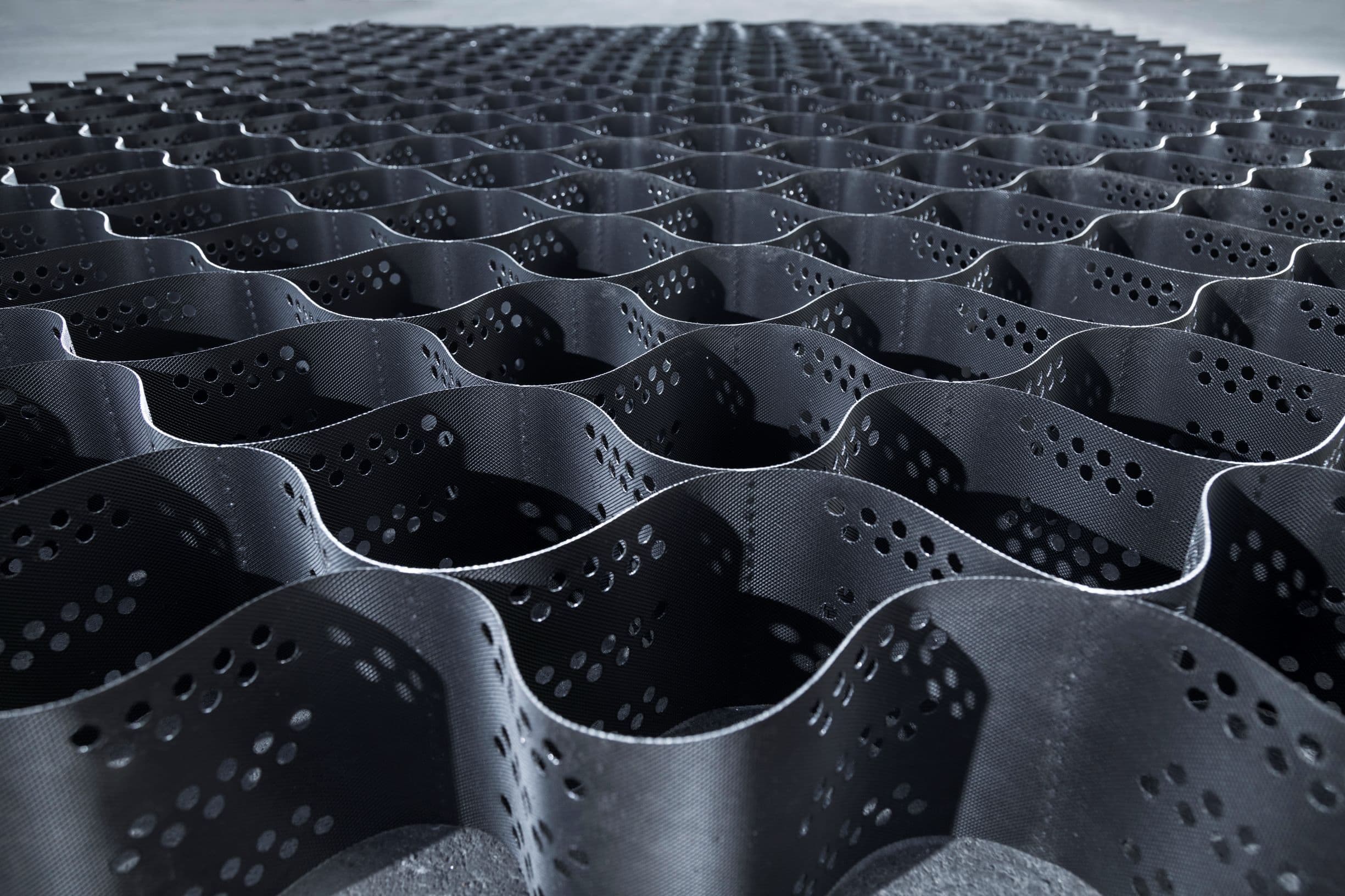
StrataWeb® (Product)
More success stories
CONSULTATION
From know-how to manufacture, installation and support.
Strata not only provides geotechnical products, but our team of 200+ engineers can help you with your turnkey project by supplying you with technical knowhow and support as to how our products can help you finish your projects in time while keeping costs down.
Send us your queries and we will get back to you with our expertise.