
Key advantages of Check Dams
Controls erosion and reduces flow velocity.
The confined infill and textured surface increase hydraulic roughness and reduce near-bed velocity. Slower water movement upstream means less force along the channel edges behind the obstruction. To handle rougher conditions downstream, protective layers at the base and edge need careful shaping.
Improves sediment retention
Reduced upstream velocity promotes sediment settlement. When dams are spaced so that the downstream crest aligns near the upstream toe elevation, a stepped energy-dissipating profile forms. This supports gradual grade stabilization.
Improved tolerance to minor differential settlement
Rigid dams are susceptible to cracking under uneven settlement. StrataWeb® distributes loads through a flexible cellular matrix and improves tolerance to minor differential movement. This reduces structural discontinuity in weak or seasonally saturated soils.
Reduced concrete usage and simplified construction
Stability comes from confinement-enhanced composite action rather than relying solely on structural mass. Where hydraulics allow, some uses cut back on concrete - or skip it altogether. Concrete amounts shift depending on flow needs across different projects.
Fewer concrete needs mean less need for molds and shorter drying periods because of lighter delivery requirements - efficiency rises where access is tough.
Long service life
StrataWeb® geocells are manufactured from durable polymeric materials engineered for geotechnical applications. Service life is influenced by polymer formulation, UV exposure, chemical conditions, abrasion potential, hydraulic loading, and long-term creep behavior.
When buried or protected from prolonged UV exposure and installed in accordance with design specifications, the system provides long-term performance with routine inspection and maintenance.
Reduced environmental impact
One advantage involves reducing the use of concrete. Reduced transportation requirements can contribute to lower embodied carbon, depending on project design and material sourcing. Locally available fill material often plays a role instead. Disruption at construction sites tends to stay low. The real impact on carbon levels comes from how each project is designed. Long-term analysis shapes the outcome.
Strata Geosystems’ solutions for check dams
Traditional concrete or masonry check dams rely mainly on their weight for stability. If not designed correctly, high stress concentrations, uplift pressures, and localized scour can form beneath the structure on weak or erodible foundations. This can cause differential settlement, cracking, tilting, or long-term instability.
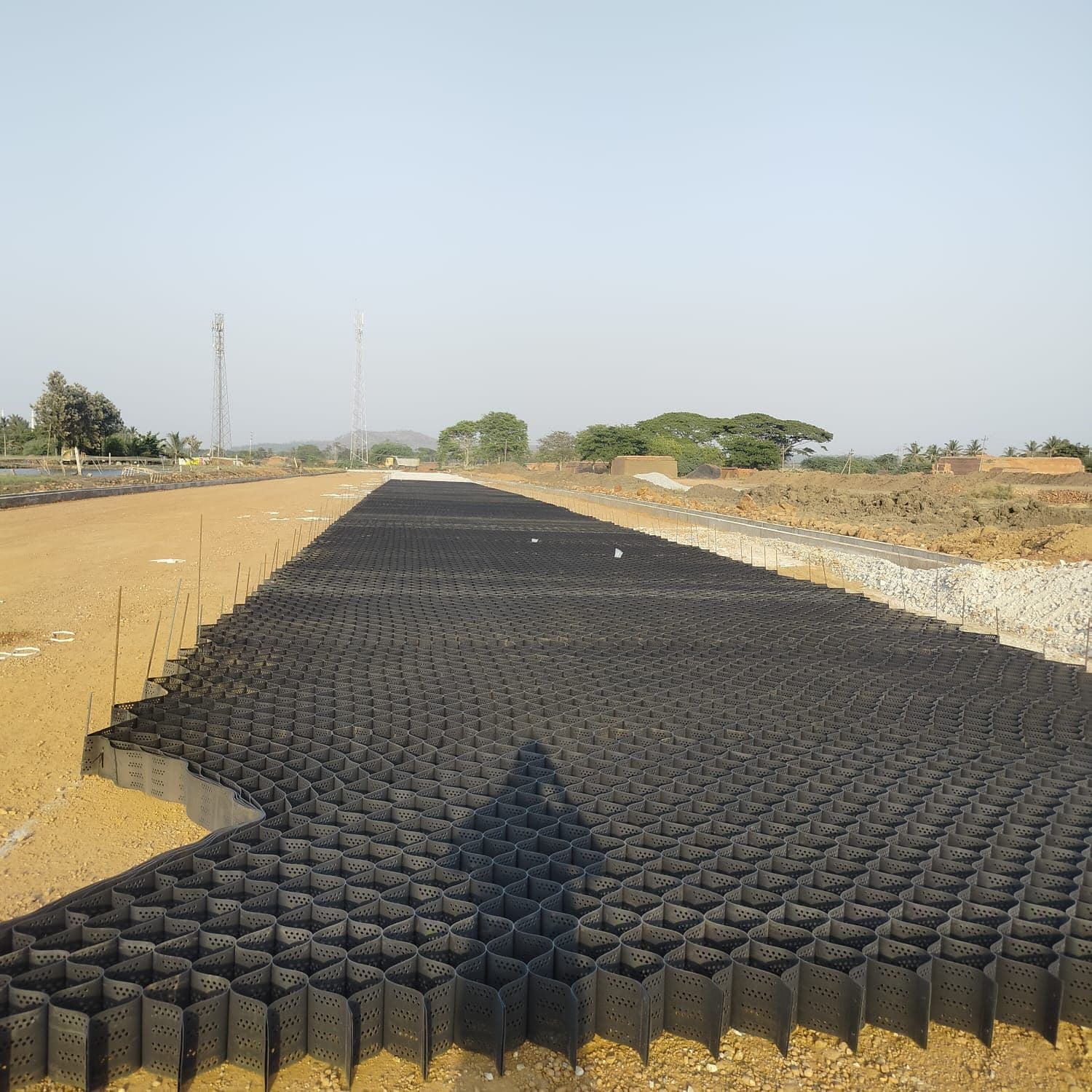
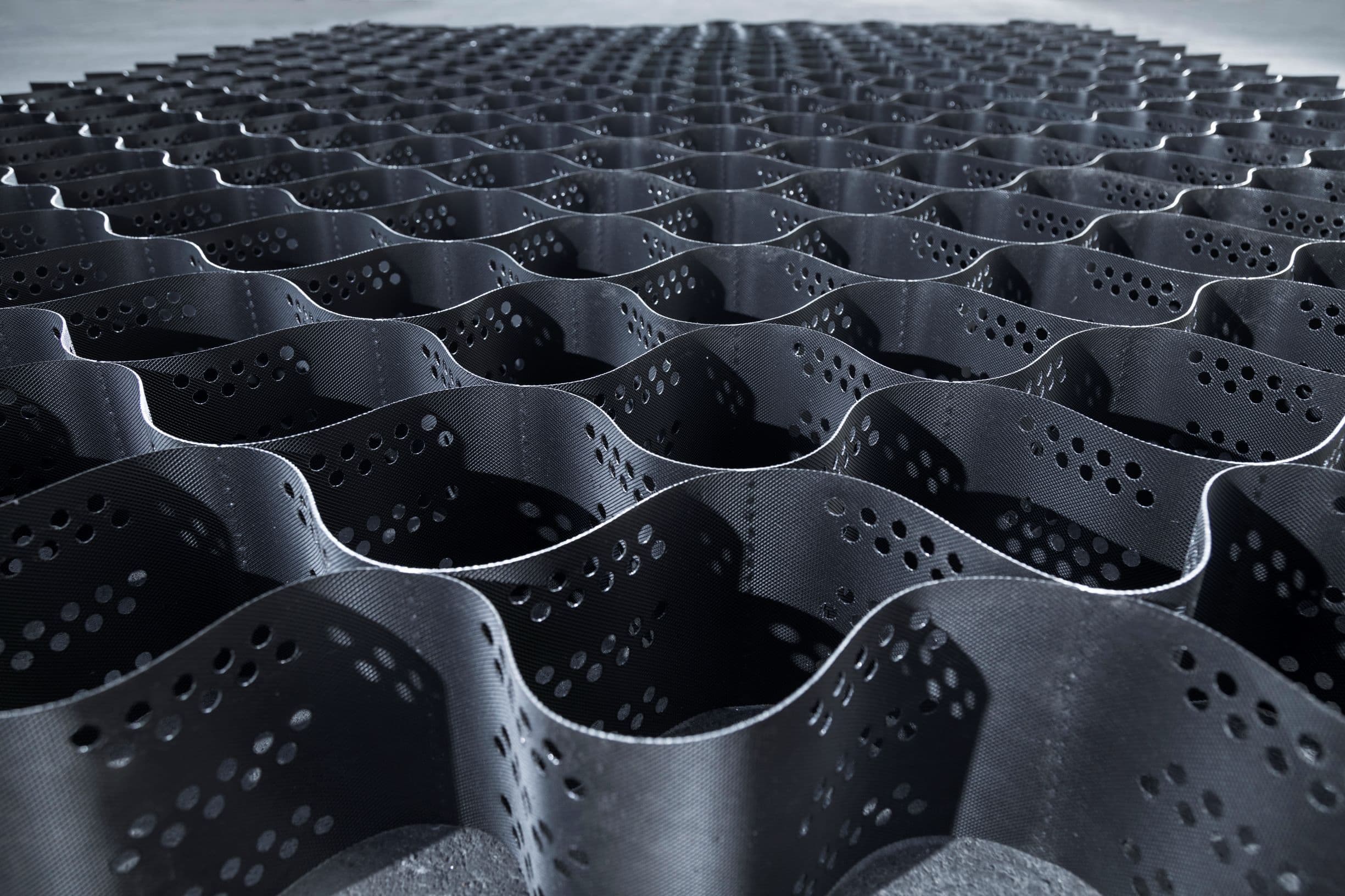
StrataWeb® helps improve structural performance by confining the infill within its cellular structure. This confinement restricts lateral spreading and enhances the apparent shear strength and stiffness of the infill by improving particle interlock and three-dimensional confinement.
The interconnected cells distribute vertical loads over a wider area, reducing stress concentration and improving behavior on weak soils. The confined infill acts as a stable composite layer rather than loose material. When properly filled in and designed for the hydraulic conditions at the site, the cellular surface can increase hydraulic roughness and contribute to flow energy dissipation and erosion resistance.
Applications of check dams
Gully erosion control
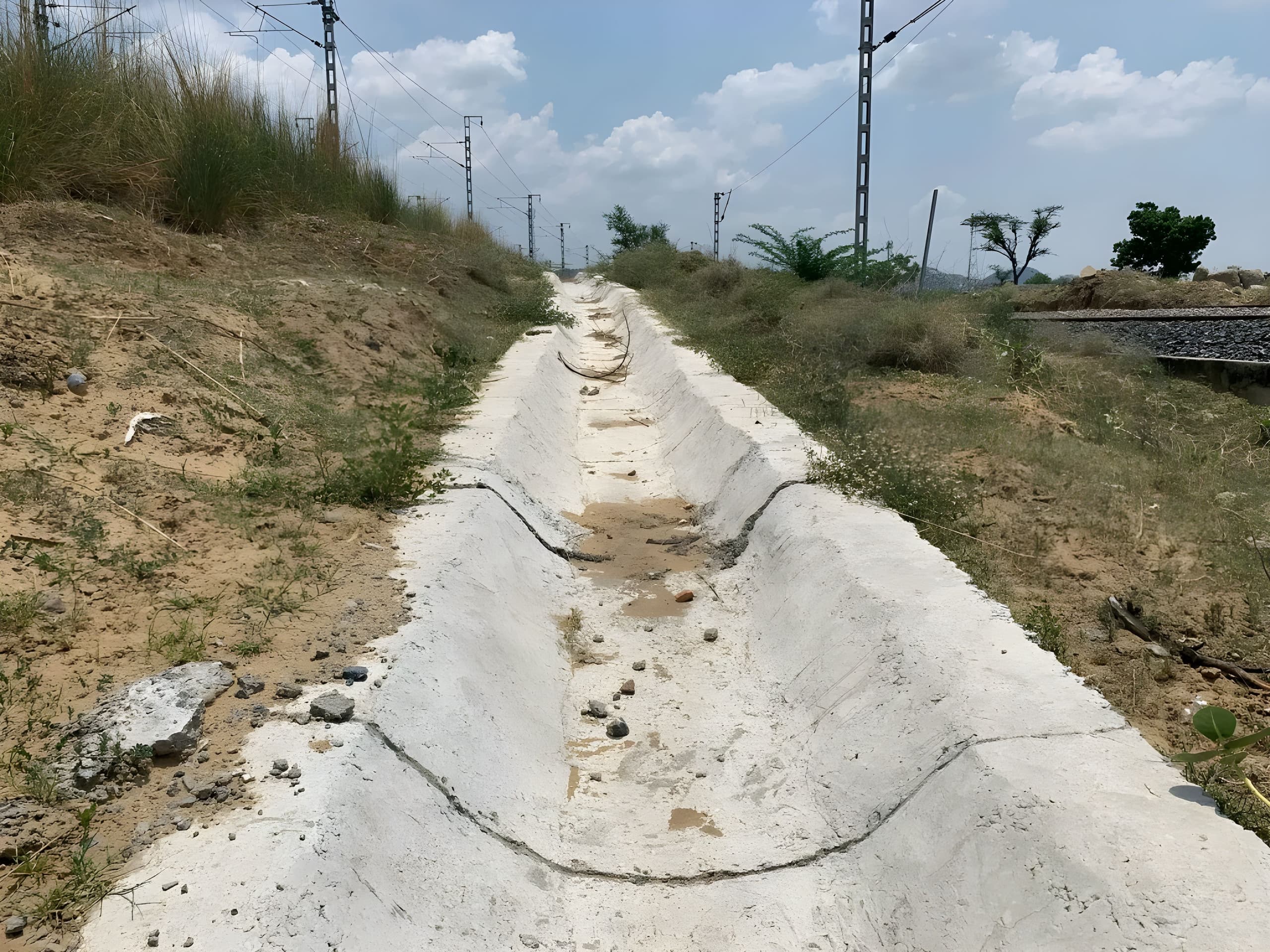
Small streams and seasonal watercourses
Watershed management projects
Mountainous and hilly terrain
Products used in Check Dams
StrataWeb® (Product)
More success stories
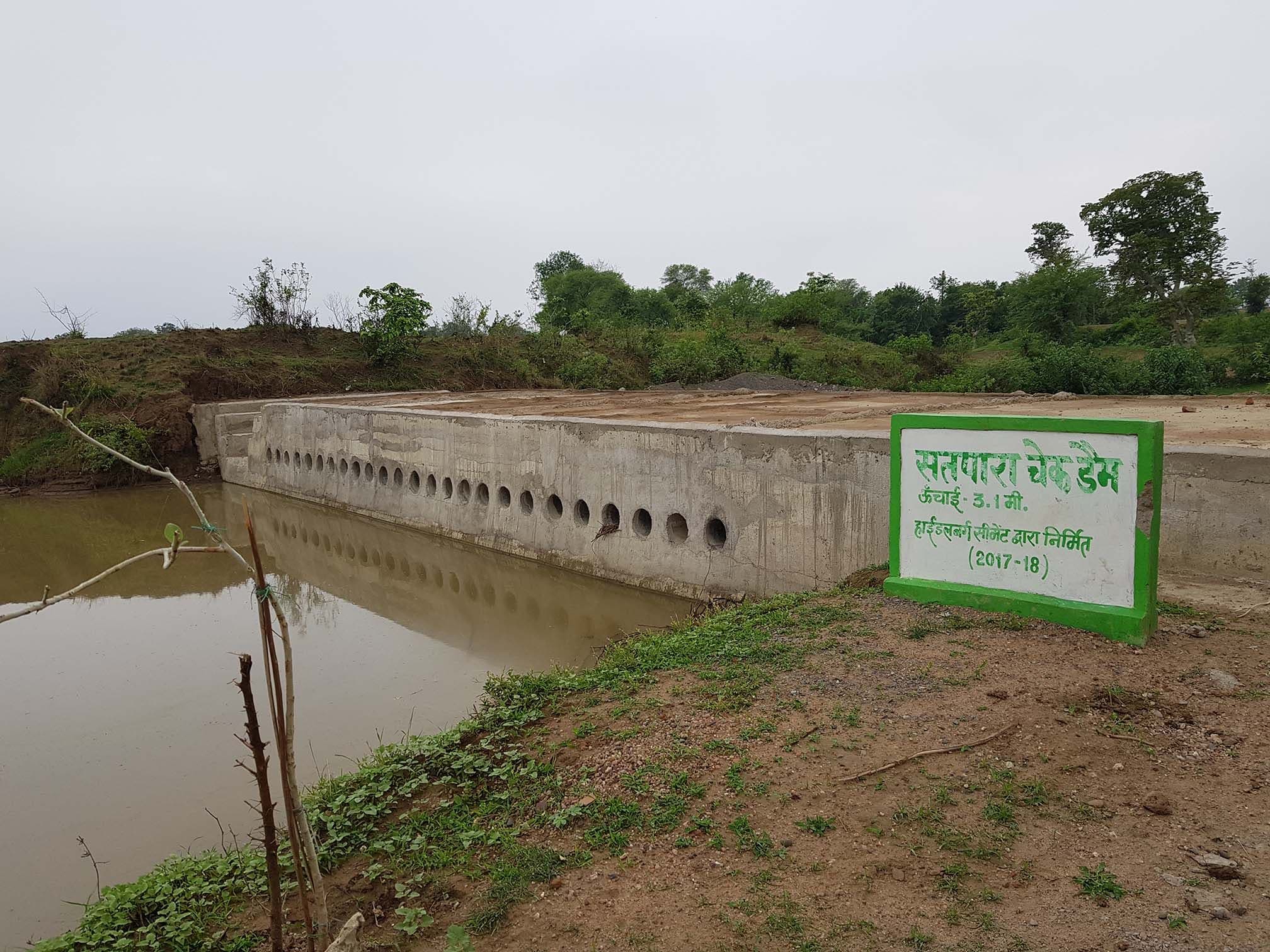
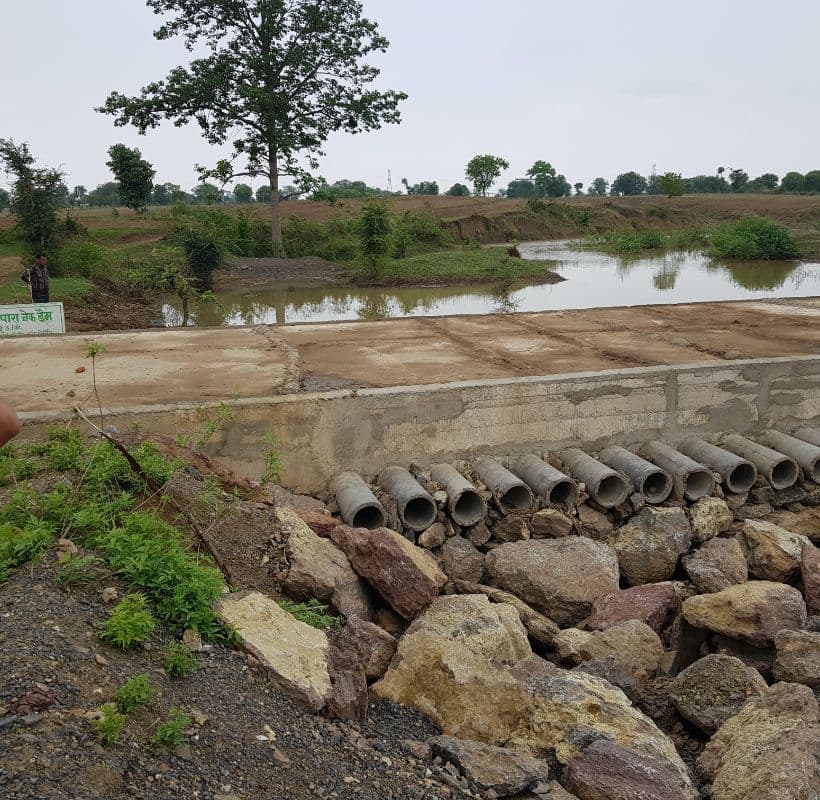
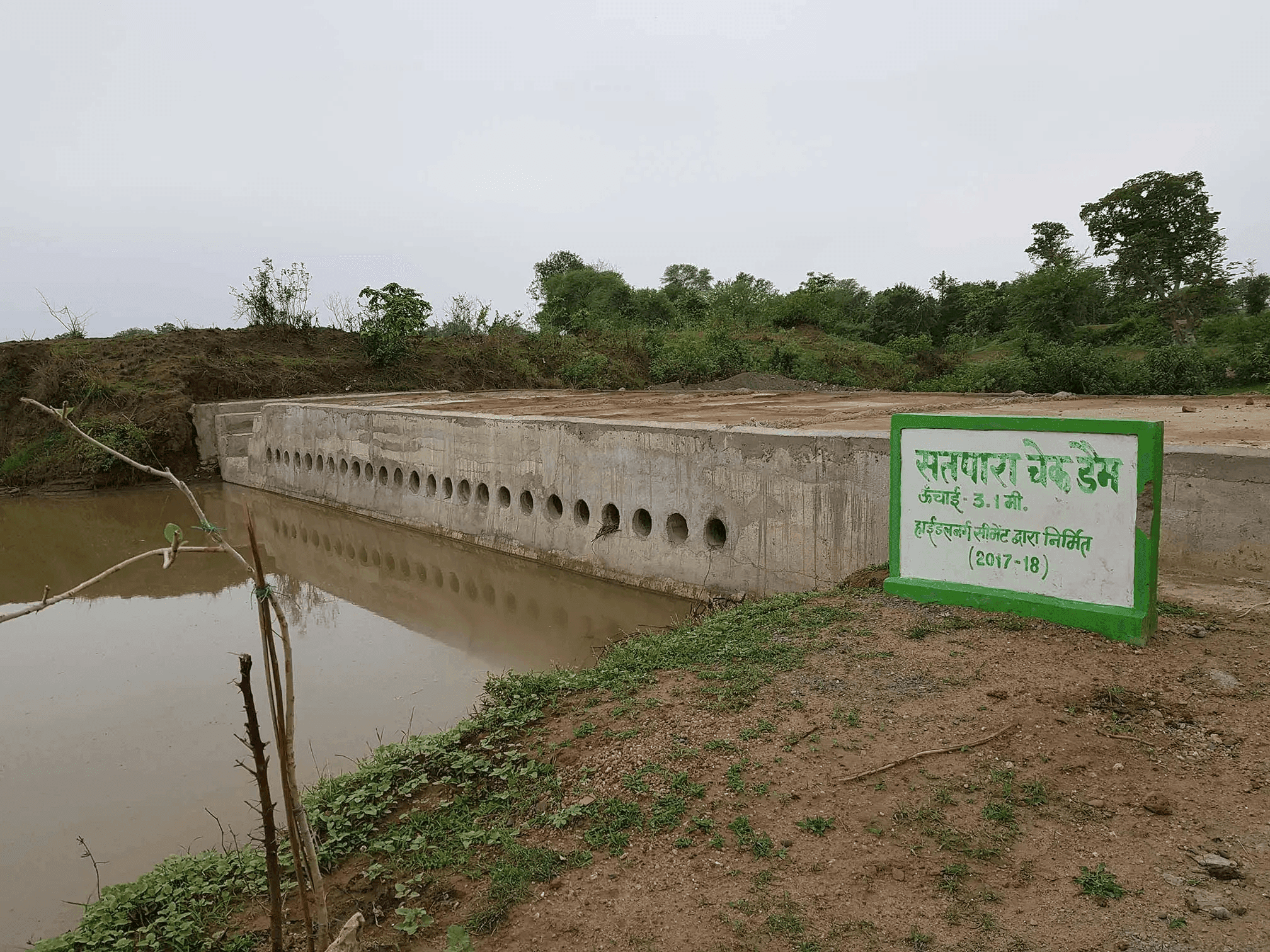
Construction of check dam using StrataWeb® Geocells in Damoh, MP
Heidelberg Cement Ltd. desired to construct a check dam to store rainwater for irrigation and other needs for the local population. Challenges of this project included remote site location and difficult terrain, rendering the site almost inaccessible for normal earthwork equipment, along with undulating ground profile and time constraints.
Looking for a little more than light reading?
StrataWeb® Brochure
CONSULTATION
From know-how to manufacture, installation and support.
Strata not only provides geotechnical products, but our team of 200+ engineers can help you with your turnkey project by supplying you with technical knowhow and support as to how our products can help you finish your projects in time while keeping costs down.
Send us your queries and we will get back to you with our expertise.