

logo
project-banner
Introducing StrataGrid™ SGV

Introducing StrataGrid™ SGV

PVA geogrids for reinforced soil structures

Reinforced-soil design has long involved a trade-off between two material families. PET geogrids offer low creep but are prone to hydrolytic degradation under sustained high-pH exposure, such as in cement- or lime-stabilised fill. Whereas PP geogrids resist alkalinity but carry comparatively higher long-term creep.

StrataGrid™ SGV is manufactured from high-modulus polyvinyl alcohol (PVA) multifilament yarns to address both geotechnical needs. PVA combines low creep performance with inherent alkaline resistance, allowing reinforced-soil designs to specify cement- or lime-treated local and marginal soils as fill, rather than relying on imported granular material.

Soil stabilization with cement or lime is now a well-established method to make locally available soils viable as structural fill. StrataGrid SGV was developed specifically to close the material-level gap traditional civil engineering practices expose. While PET geogrids are useful in specific industry applications such as highways, transport, embankments, etc, PVA geogrids solve geotechnical soil issues for intensive pH operations such as tailing dams, and other sensitive soil environments.

StrataGrid Uniaxial Geogrid installation

The PVA yarn behind StrataGrid™ SGV's performance

It's this combination (low creep and alkaline stability in the same yarn) that opens up reinforced-soil designs that standard PET or PP grids can not serve.

High tensile strength with very low elongation at design load

The grid mobilizes tensile resistance at low strain and maintains dimensional stability under sustained loading.

Very low creep

Critical wherever a structure's design life is measured in decades, not years.

Inherent alkaline resistance

PVA does not hydrolyse when it sits in cement- or lime-stabilized fill, or in naturally calcareous ground.

Uniaxial and biaxial SGV: choosing the right type

StrataGrid™ SGV is available in both uniaxial and biaxial variants, classified by how tensile strength is distributed between the machine direction (MD) and cross-machine direction (CMD). Like other uniaxial and biaxial geogrid, the distinction relates to the direction in which reinforcement strength is provided. Both configurations use the same PVA yarn system, and carry the same alkaline resistance and low-creep performance; only strength distribution changes to suit the application.

It also sets SGV apart from hybrid PVA/PP grids, which pair PVA in the machine direction with PP in the cross-machine direction. Meaning alkaline resistance and low creep hold only along one axis.

SGV, on the other hand, uses high-modulus PVA in both MD and CMD, giving uniform low-creep, alkali-resistant performance across the entire grid, along with higher reinforcement capability in the CMD direction than PP-based alternatives.

Swipe to explore
SGV Biaxial

SGV Biaxial

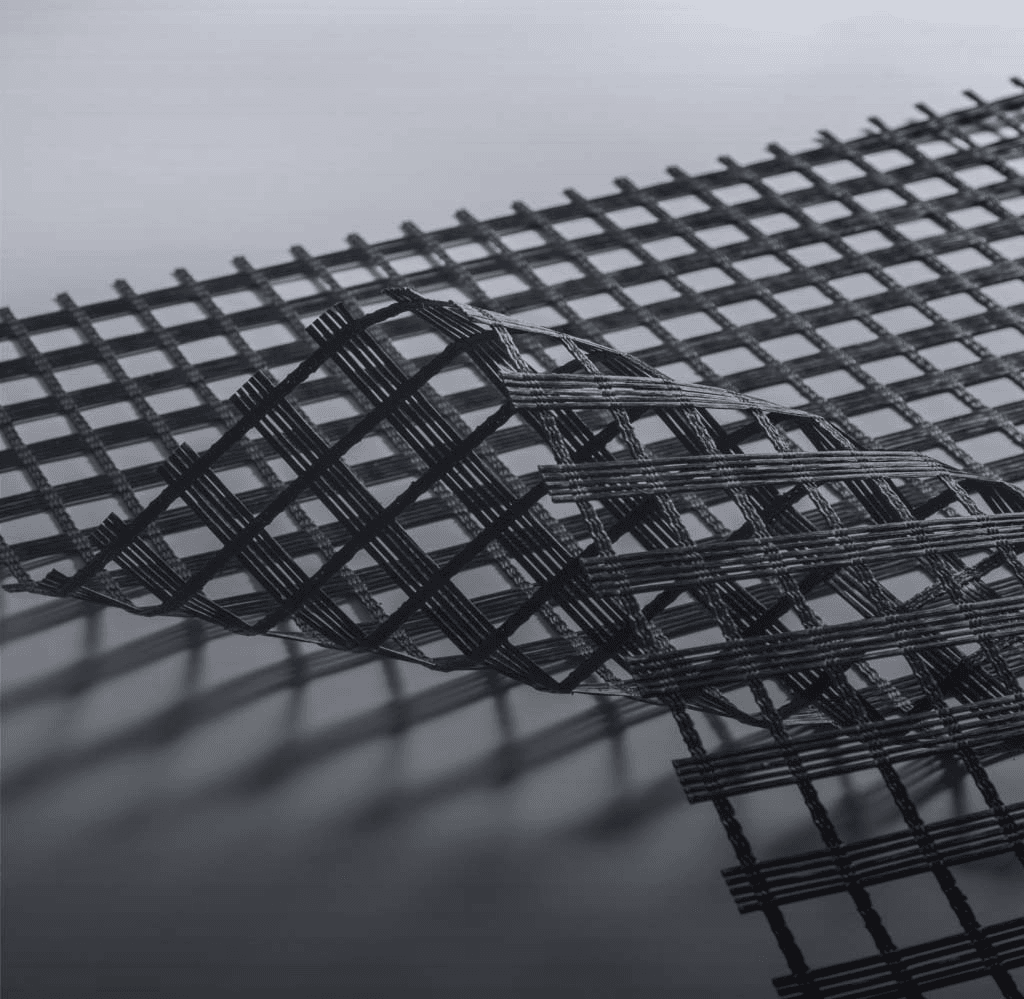
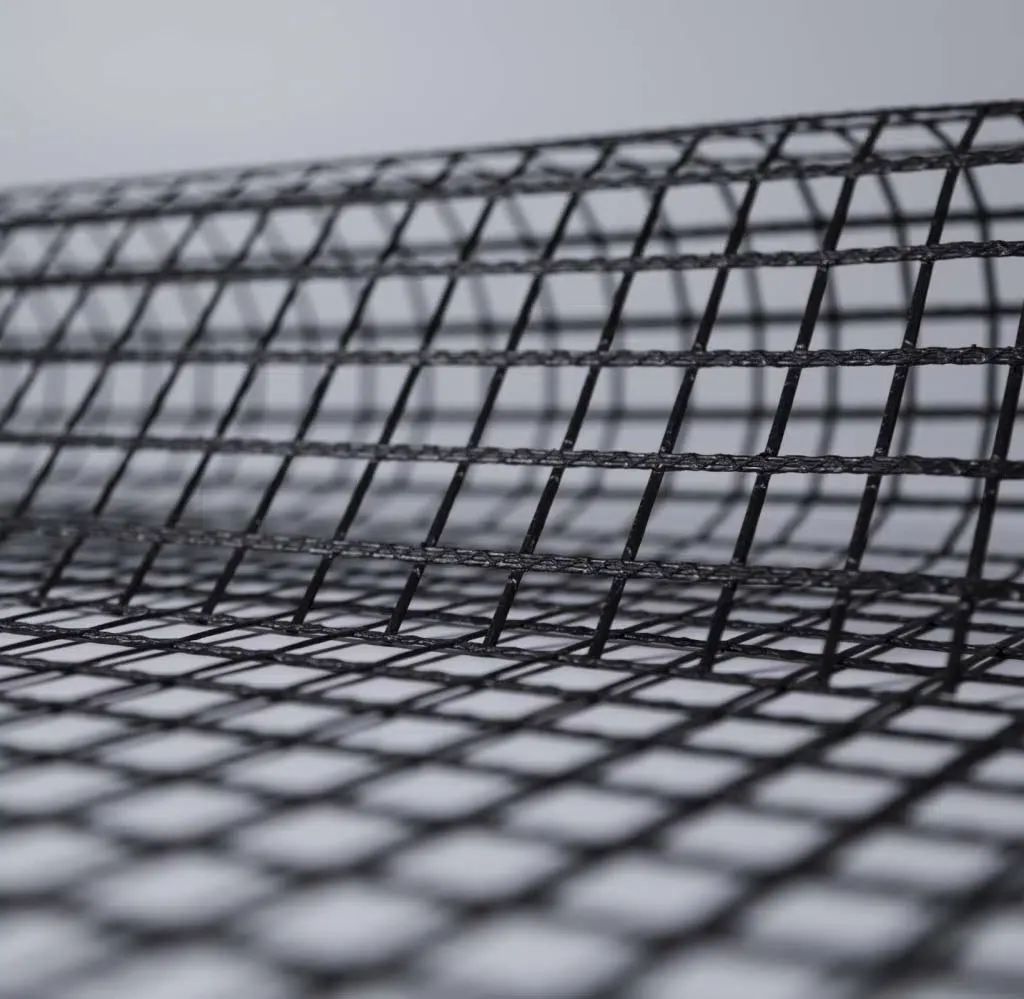
SGV Biaxial geogrid such as SGV 100/100 carry equal nominal tensile strength in MD and CMD (100 kN/m in each direction). Strength is distributed evenly across the grid, suited to applications where reinforcement is required in more than one direction, such as broad-area soil reinforcement and embankments over soft ground.

Application of SGV Biaxial

Technical specifications

PropertyUnitSGV 60/20 UniaxialSGV 100/100 Biaxial
Nominal tensile strength MDkN/m60100
Nominal tensile strength CMDkN/m20100
Elongation at nominal strength MD%≤6≤6
Elongation at nominal strength CMD%≤6≤6
Creep reduction factor (20°C, 120yr)RF_CR1.331.33
Creep limited strengthkN/m45.175.2
Aperture size MD/CMDmm25/2525/25
Roll widthm3.83.8
Roll lengthm100100

Core material: high-modulus PVA multifilament yarn, polymer-coated. Tested to ASTM D6637 / EN ISO 10319. Values subject to manufacturing tolerance; custom roll lengths available on order.

Where StrataGrid™ SGV is used

SGV is used in reinforced-soil applications where long-term performance and alkaline exposure are both governing design criteria:

  • Reinforced soil retaining walls and steep reinforced slopes
  • Bridge abutments and approach embankments
  • Embankments over soft or marginal ground
  • Projects specifying cement- or lime-stabilised fill or local soils in place of imported granular fill
  • Any long-design-life structure where low creep under sustained load is a governing design criterion

Across sectors, that translates into highway and expressway embankments, railway formation and embankment reinforcement, ports and coastal or marine infrastructure, mining haul roads and tailings containment embankments, and industrial or logistics yards built over marginal or chemically stabilised ground.

Success Stories

Infrastructure demands solutions that perform under pressure. See how our certified systems and expertise have delivered long- term stability in projects across the globe.

Manufacturing, testing and certification

SGV is manufactured from virgin PVA yarn at Strata's Daheli plant, part of Strata's established StrataGrid™ reinforcement range. Product testing is carried out at GAI-LAP and NABL accredited laboratories.

  • ISO 9001:2015, ISO 14001:2015, ISO 45001:2018 - Daheli manufacturing facility

  • ISO 17025:2017, ISO 27001:2022, GAI-LAP - laboratory accreditation

  • CE Certified, approved by SKZ

PVA Geogrids for Alkaline Soil Reinforcement | StrataGrid SGV