Site Overview:
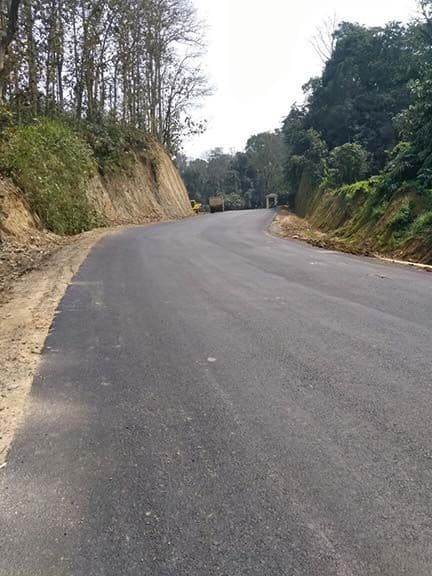
The project focused on rehabilitating a damaged section of National Highway NH-44 near the Assam-Tripura border, a critical land link for Tripura with highly plastic, weak clayey soil subgrade affected by heavy rain in March 2016. The National Highway NH-44 is a major road artery for the North East, and the stretch leading to the border of Assam and Tripura is the only land link between Tripura and the rest of the country. NH-44 is the state’s lifeline for supplies, victuals, and all commercial activities.
Challenges on the site:
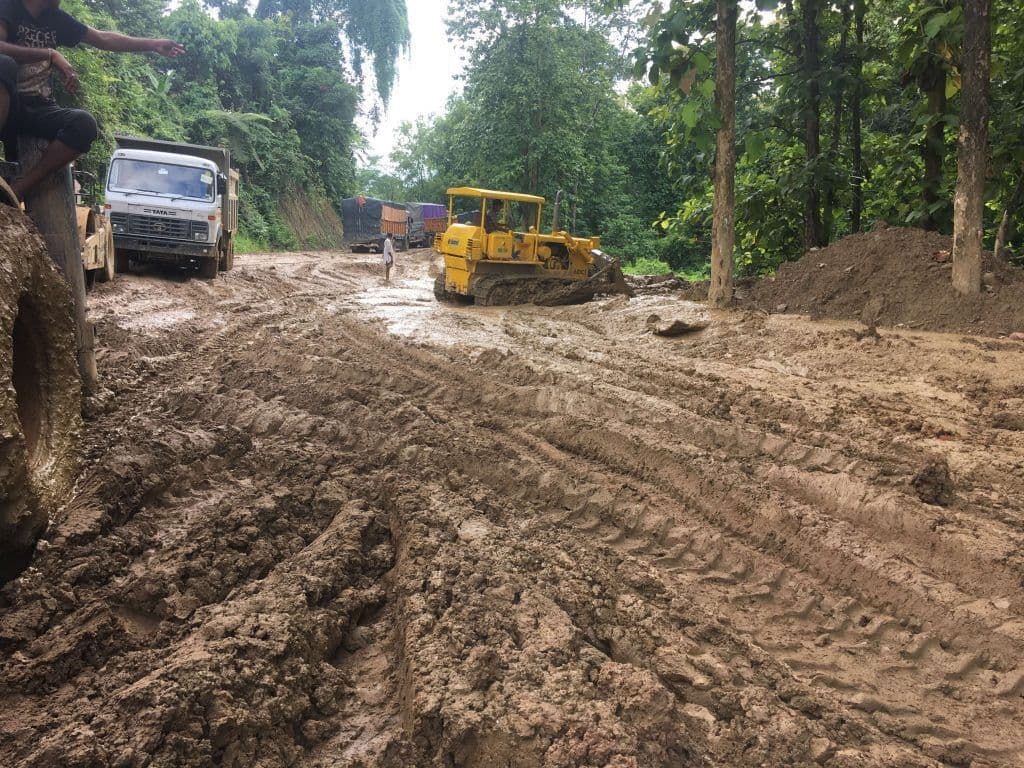
The challenges included failed conventional repairs, chaotic traffic conditions, blockage of goods to Tripura, and virtual isolation from the rest of the country due to the subgrade’s unsuitability for smooth traffic flow. The subgrade of the highway is highly plastic, weak clayey soil. There was heavy rain in March 2016, which damaged this stretch, as shown in the pictures. Conventional repairs were attempted but were unsuccessful in allowing smooth traffic across this 500m stretch. With the bottleneck of stranded vehicles, the situation turned chaotic and untenable, causing blockage of all goods to Tripura and virtual isolation from the rest of the country. The issue escalated to the Central Government because the prices of essential commodities, including fuel and food, hit the roof.
Objective to be achieved by Strata:
The primary objective was to address drainage and strengthen the pavement section to enable smooth traffic flow and prevent further chaos and isolation of Tripura from the rest of India.
Strata’s solution for achieving the objective:
Strata recommended the use of StrataWeb® within the pavement section to resolve drainage and pavement strengthening issues. This innovative solution aimed to provide a durable and efficient infrastructure for the critical highway stretch.
The process of laying StrataWeb®:
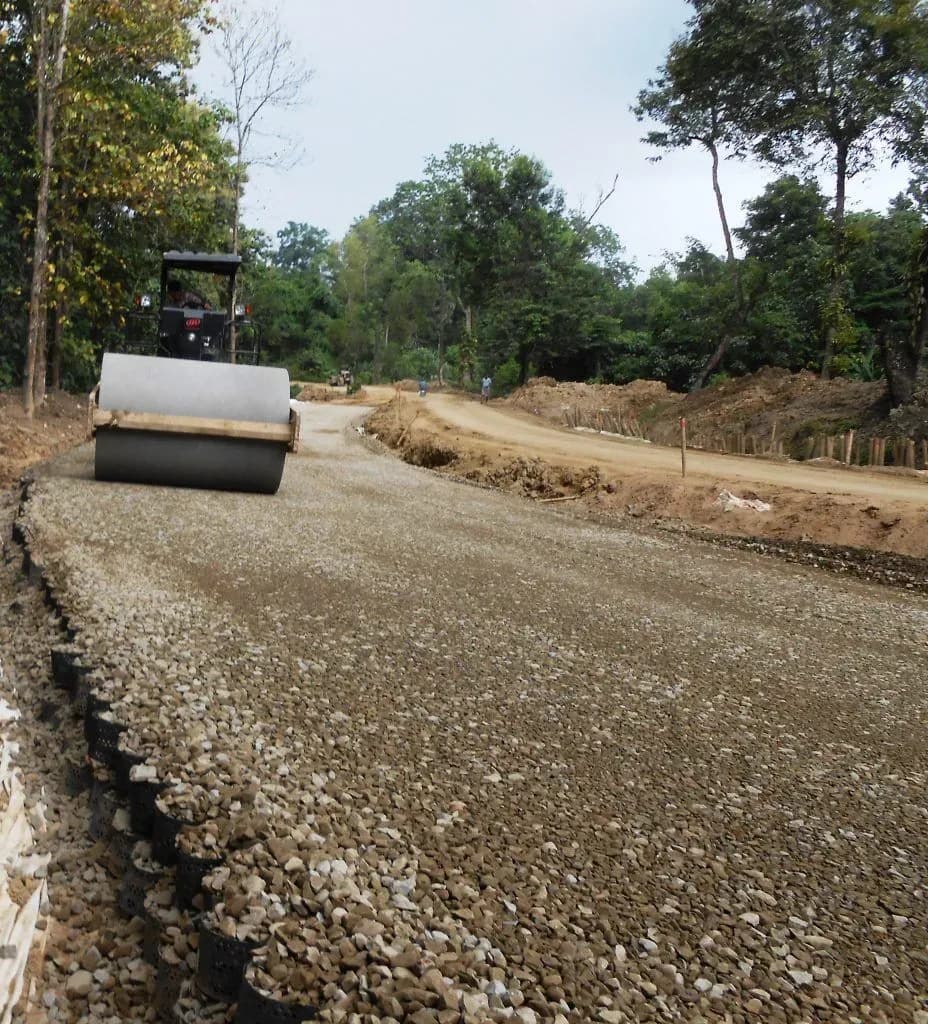
StrataWeb® was used within the pavement section to address both drainage and pavement strengthening challenges. The process involved several steps:
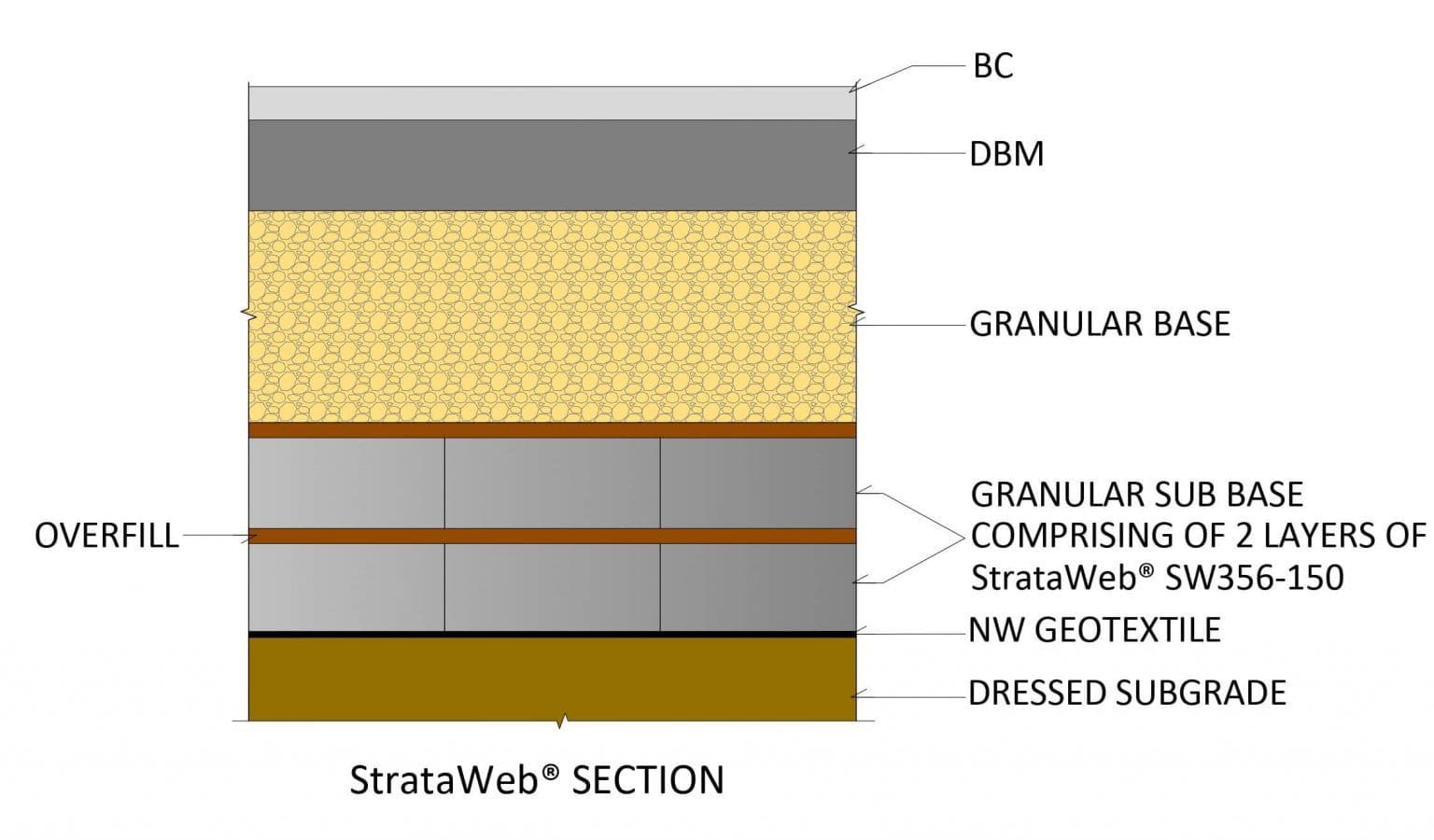
- Scraping off the remnants of the existing road: The damaged road surface was removed, preparing the area for the new pavement section.
- Dressing, leveling, and compacting the subgrade: The subgrade was then dressed, leveled, and compacted to ensure a stable foundation for the new pavement.
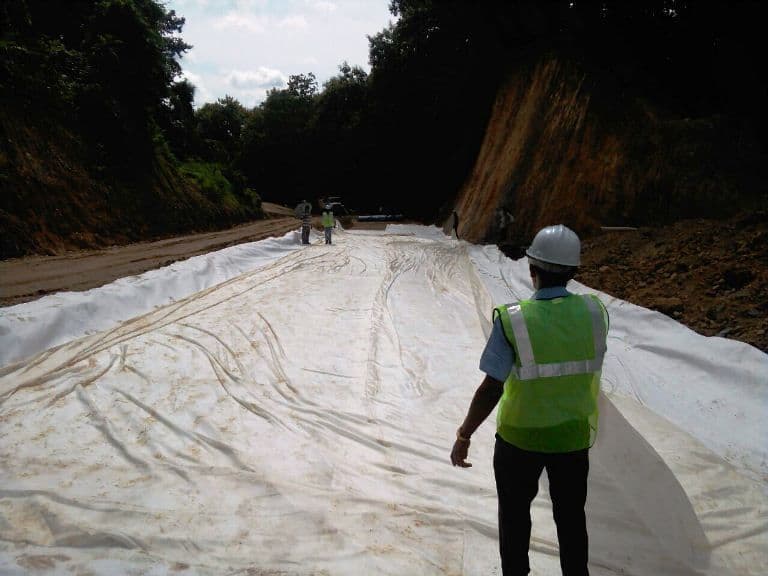
- Placing a non-woven geotextile: A non-woven geotextile was placed above the compacted surface to prevent intermingling of the engineered section with the weak plastic subgrade, enhancing the overall stability of the pavement.
- Laying the granular base: The highway was opened to all traffic immediately after the granular base was laid, ensuring smooth traffic flow and allowing for the timely completion of the project.
- Placing bituminous concrete and dense bituminous macadam layers: The bituminous concrete and the dense bituminous macadam layers were placed later, ensuring a durable and efficient infrastructure for the critical highway stretch.
How has StrataWeb benefited this project?
- Ensured smooth traffic in record time under distressing conditions.
- Strengthened the pavement compared to conventional methods.
- Reduced maintenance costs and increased the road’s lifespan significantly.
- Addressed critical issues with the subgrade and pavement, improving overall road performance.